Anyone Can Edit
Why can strangers who never meet, show no credentials and are not paid write a reference work people trust, and what happens to it when machines answer the questions people used to bring to it?
A side project of an encyclopedia that could not finish its articles became the reference work of the internet. This essay follows the decisions that shaped Wikipedia, from the first wiki and the refusal of advertising through the rules of neutrality and verifiability, the Seigenthaler hoax, the decline of editors and the battles over money, bias and censorship, to the AI systems trained on it that now draw its readers away.
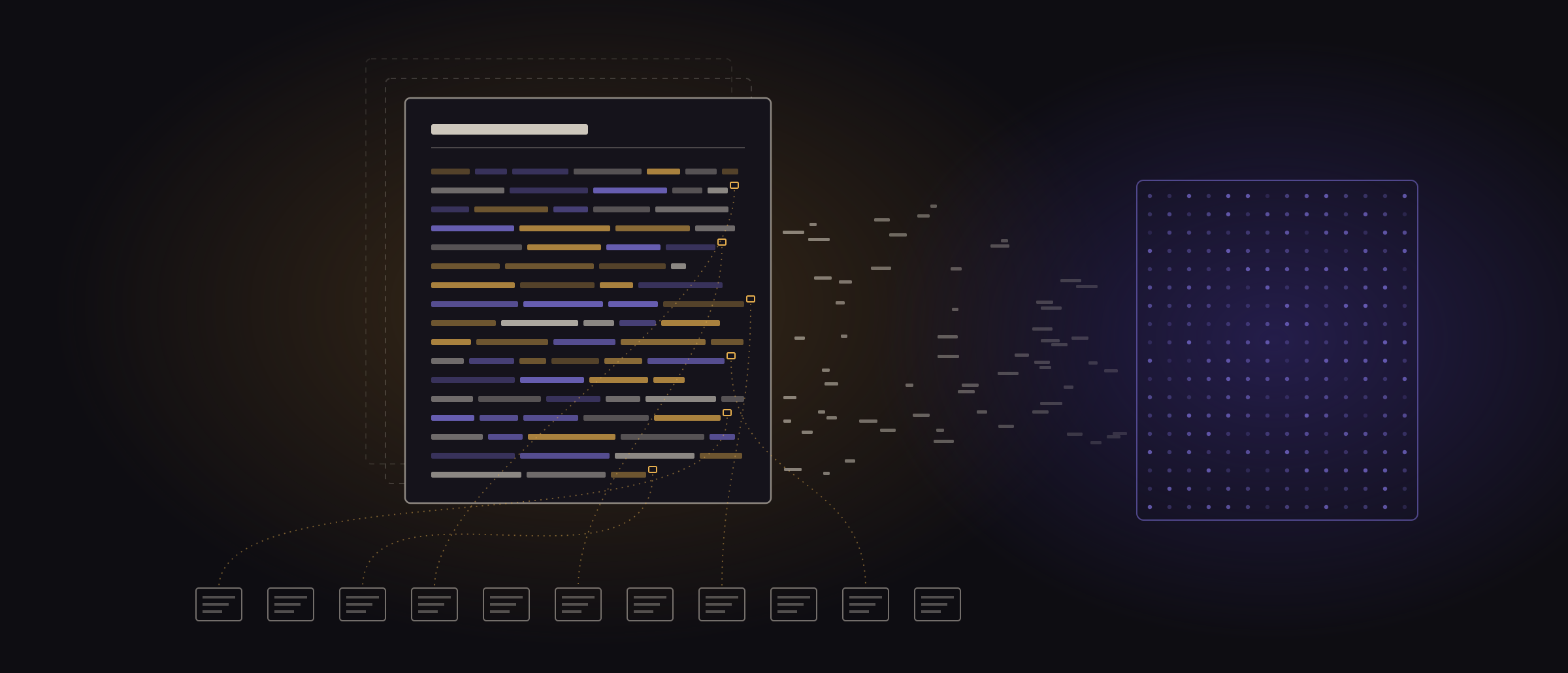
For people who build products
Decisions worth studying
8 decisions from this history, each with the situation, the alternatives, what happened and a verdict. Open one for the full case. The verdict says how a decision turned out, which is not the same as whether it was wise; see moral luck.
-
Open a wiki that anyone could edit, without review, as a separate site rather than a feeder inside Nupedia's expert process When the careful process is not producing anything, try the open one somewhere it cannot do damage, and watch what happens.
- Situation
- Nupedia's seven-step expert review had produced only about two dozen articles in a year, and its advisers objected to mixing open drafts with reviewed work.
- Alternatives
- Simplify Nupedia's review; keep the wiki inside Nupedia as a drafting tool; abandon the free encyclopedia.
- Numbers
- About 3,900 articles by May 2001 and about 20,000 by early 2002.
- What happened
- Wikipedia outgrew Nupedia within weeks and became the largest reference work ever made; Nupedia closed in 2003.
- Verdict
- A cheap experiment, run separately so that its failure would not harm the main project, turned out to be the main project.
A small working thing beats a grand designOpen standards out-reach closed gardens
-
Drop plans to carry advertising and move Wikipedia to a nonprofit foundation funded by donations How a project is paid for decides what it will be tempted to become.
- Situation
- The dot-com crash had cut Bomis's income, the paid editor had resigned, and Spanish-language editors had left partly over fears of advertising.
- Alternatives
- Sell advertising to pay for staff and servers; sell or license the project to a company.
- Numbers
- Revenue of $208.6 million in 2024–25, from donations averaging $11.
- What happened
- Wikipedia stayed free of advertising and data collection, and its foundation grew on reader donations, though its banners later drew criticism for overstating need.
- Verdict
- Removing advertising removed the incentive to maximise attention and gave volunteers a reason to keep writing for free.
-
Judge content by neutral presentation and verifiability from published sources, not by the credentials or beliefs of its authors If you cannot verify who is speaking, make every claim show where it came from.
- Situation
- Anonymous strangers who disagreed needed a way to produce one text, and cranks wanted to publish original theories.
- Alternatives
- Require experts to approve articles, as Nupedia did; let majorities vote on contested facts.
- What happened
- The rules let millions of strangers collaborate and made Wikipedia's claims checkable, though they tied it to the biases of published sources.
- Verdict
- Trusting sources rather than authors solved the problem of anonymous contribution without excluding anyone.
-
After the Seigenthaler hoax, stop unregistered users creating articles and adopt strict sourcing rules for biographies of living people Put the strongest safeguards where the harm falls on people who never chose to take part.
- Situation
- A false biography had stayed up for four months and been denounced in a national newspaper.
- Alternatives
- Require registration for all editing; review all edits before publication; change nothing.
- What happened
- Biographies became the most tightly policed part of the encyclopedia while anonymous editing of existing articles continued.
- Verdict
- A targeted rule protected the people most exposed to harm without closing the encyclopedia to newcomers.
-
Defend the encyclopedia with automated reverts, templated warnings and ever more detailed rules, without equal attention to newcomers A defence that cannot tell a beginner from an attacker will teach beginners to stay away.
- Situation
- Rapid growth brought floods of vandalism that volunteers could not catch by hand.
- Alternatives
- Review new users' edits gently before reverting; send personal welcome messages; limit tools to clear vandalism.
- Numbers
- Active editors peaked at 56,400 in March 2007; good-faith newcomers still editing after two months fell from 25.6 to 11.7 per cent.
- What happened
- Vandalism was reverted in seconds, but good-faith newcomers were driven off and the editing community shrank.
- Verdict
- The tools solved the problem in front of the editors and created a slower one they did not measure.
Defences against abuse concentrate the marketThe metric becomes the target
-
Raise money with banners implying that Wikipedia's existence depended on each reader's donation An organisation that speaks for volunteers must ask for money in terms the volunteers would sign.
- Situation
- Banners were the Foundation's largest source of revenue, and spending grew about tenfold over a decade.
- Alternatives
- State the Foundation's reserves and spending plainly; ask for support for specific programmes.
- Numbers
- Net assets of $296.6 million in 2025, about seventeen months of spending.
- What happened
- Revenue grew steadily, but in 2022 editors reached a near-unanimous consensus against the banners, and the Foundation agreed to change them.
- Verdict
- The appeals worked on readers and cost the Foundation credibility with the volunteers whose work they described.
-
Charge the largest commercial re-users, including AI companies, for a paid feed through Wikimedia Enterprise while keeping the content free When others profit from a commons, charge for the service you add, and keep the commons open.
- Situation
- Search engines and AI systems used Wikipedia heavily, and automated scraping was driving up costs while readers' visits fell.
- Alternatives
- Rely on donations alone; restrict reuse through licensing; block crawlers outright.
- Numbers
- Enterprise earned $8.3 million in 2024–25, about 4 per cent of revenue.
- What happened
- Google, Amazon, Meta, Microsoft, Mistral AI and Perplexity became partners on undisclosed terms, but the revenue remained small next to donations from shrinking readership.
- Verdict
- Charging for convenience rather than content kept the licence intact, but it is not yet clear that it can pay for an editing commons whose readers are leaving.
Making something cheap moves the cost to someone elseWho pays shapes what gets built
-
Bar large language models from generating or rewriting article text, allow speedy deletion of machine-written pages, and resist AI summaries Where trust rests on who wrote something, protect the authorship before the efficiency.
- Situation
- Machine-written articles were appearing, cleanup was overwhelming volunteers, and the Foundation had begun testing AI summaries.
- Alternatives
- Permit AI drafting with human review; allow AI summaries with labels; leave decisions to individual editors.
- Numbers
- About 5 per cent of new English articles in August 2024 were flagged as machine-written.
- What happened
- English Wikipedia became one of the largest bodies of text written under an explicit rule of human authorship.
- Verdict
- The rule protects verifiability and the community's identity, though it is hard to enforce and may forgo useful help.
Real values are what you rewardUsers decide what the product is for
At 12.50 in the afternoon on 10 January 2001, Larry Sanger sent a message to the mailing list of Nupedia, an online encyclopedia he edited, under the subject line “Let’s make a wiki.” It began: “No, this is not an indecent proposal. It’s an idea to add a little feature to Nupedia.” His employer, Jimmy Wales, he wrote, “thinks that many people might find the idea objectionable, but I think not.” A wiki was a set of web pages that anyone could change, and Sanger’s idea was modest: articles could be drafted there and, if they became good enough, passed into Nupedia’s formal review by experts. “Does anyone have an objection to our trying this out?” Four and a half hours later he posted again: “Told you we could make it fast.”1
Nupedia’s expert advisers wanted nothing to do with it, so the wiki moved to its own address, wikipedia.com, on 15 January 2001. Twenty-five years later Wikipedia had about 65 million articles in more than 300 languages, nearly 250,000 volunteers editing each month and about 15 billion views a month.2 The foundation that runs it raised $208.6 million in 2024–25, from donations averaging $11, without carrying a single advertisement. Nupedia, which it had been meant to feed, completed about two dozen articles before its server failed in 2003.3 And the encyclopedia written by anyone now faced the same question it had once put to Britannica: in October 2025 its foundation reported that human visits had fallen about 8 per cent in a year, as people took their answers from machines trained, in large part, on Wikipedia itself.
This essay follows how a side project of a failing encyclopedia became the reference work of the internet. It follows the decisions that shaped it: to let anyone edit; to take no advertising; to settle disputes by sources rather than credentials; to defend the encyclopedia with bots and rules that, in the process, shut out newcomers; to give its content away under a licence that let others build on it; to sell access to the companies that use it most. Its deeper subject is an old question about knowledge in a new form. Most of what anyone knows rests on the word of others. Wikipedia asked people to trust words written by strangers they would never meet, who had no credentials they were required to show and no payment to make them careful. That it largely worked is one of the strangest facts of the past quarter-century, and the conditions that made it work are now in question.
The circle of learning
The encyclopedia was a political project before it was a reference book. Between 1751 and 1772 Denis Diderot, with Jean le Rond d’Alembert until 1759, published the Encyclopédie in Paris: seventeen volumes of text and eleven of plates, about 72,000 articles by more than 140 contributors, many of them paid, and the first general encyclopedia to credit its authors systematically. The French state suspended it in 1752 and revoked its licence in 1759, and Diderot finished it in semi-secrecy. His aim, in the article on the word “encyclopédie” itself, was to change the way people think.4
The Encyclopaedia Britannica, first published in Edinburgh between 1768 and 1771, became the model of the opposite kind of authority: named experts, a fixed edition, a set of books sold door to door at great expense. Its revenue peaked at about $650 million around 1990.5 Its decline began not with Wikipedia but with the compact disc. In 1985 Microsoft offered to make a CD-ROM version and Britannica refused. Microsoft bought rights to a cheaper encyclopedia, Funk & Wagnalls, and in 1993 launched Encarta, which soon sold for about $99 and was often bundled with new computers. By 1996 Britannica’s revenue had roughly halved, and it was sold that year for $135 million.6
Others had imagined a free encyclopedia on the network. H. G. Wells described a “World Brain” in the 1930s; in 1993 Rick Gates proposed an “Interpedia” on Usenet that never left the planning stage; and the free software campaigner Richard Stallman wrote that the web “has the potential to develop into a universal encyclopedia covering all areas of knowledge,” one in which “no one organization will be in charge.”7 The technical means came from elsewhere. On 25 March 1995 the programmer Ward Cunningham opened the WikiWikiWeb, a site any visitor could edit, named after the “wiki wiki” shuttle bus he had taken at Honolulu airport; “wiki” is Hawaiian for quick.8
An encyclopedia that could not finish
Nupedia was Wales’s idea and was paid for by his company, Bomis, a web portal that earned its money from advertising. Wales hired Sanger, a doctoral student in philosophy, as editor-in-chief at the start of 2000, and the site went online that March. Its articles were written by volunteers but had to pass a seven-step review by experts before publication. Sanger later recalled that after eighteen months it had published “just over 20” articles.3
The wiki was meant to solve that problem. On 2 January 2001, at dinner in San Diego, a friend, Ben Kovitz, explained Cunningham’s wiki to Sanger; eight days later Sanger proposed one, and the same day it was running. When the advisers objected, it was given its own name, which Sanger chose, and its own domain. On 17 January he asked Nupedia’s list to “humor me. Go there and add a little article. It will take all of five or ten minutes.”9 By Sanger’s count Wikipedia had about 600 articles by the end of January and 3,900 by May. German and Catalan editions began in March, Spanish in May. By early 2002 the English edition had about 20,000 articles, hundreds of times Nupedia’s output.10
The decision to give the wiki its own site deserves a closer look, because it was taken for the wrong reason and turned out right. Sanger’s proposal treated the wiki as a drafting room for Nupedia, a way to feed the expert process rather than replace it. The advisers’ objection was about quality: unreviewed text in the same place as reviewed articles would cheapen Nupedia’s name. The alternatives were to simplify Nupedia’s review, which Sanger later proposed and never achieved, or to keep the wiki as an internal tool. Separating them protected Nupedia and, without anyone intending it, freed Wikipedia from Nupedia’s standards. The trade-off was explicit only in hindsight: an encyclopedia that published first and corrected afterwards, rather than one that corrected first and rarely published at all.
The founding rules were few and loose. By his own account, Sanger insisted from the start on neutrality and wrote, as a “temporary and humorous injunction,” a rule to “ignore all rules” if they got in the way of improving the encyclopedia.11 Who founded the project remains disputed. Wales has called Sanger’s claim to be co-founder “absurd”; Sanger points to documents from 2001 that describe him as one. What the record supports is that Wales conceived and funded the free encyclopedia, and Sanger proposed the wiki, named it and led it in its first year.12
No advertising
The dot-com crash decided the next question. Bomis, by Sanger’s account, lost a large contract at the end of 2001, and Sanger was told his job could not be paid for; on 1 March 2002 he resigned. The same day Wales wrote to the project’s mailing list: “With the resignation of Larry, there is a much less pressing need for funds. Therefore, all plans to put advertising of any kind on the wikipedia is called off for now. We will move forward with plans for a nonprofit foundation to own wikipedia.”13 A few days earlier, most of the Spanish-language editors had walked out to found a rival, the Enciclopedia Libre, citing fears of advertising, the commercial domain and their lack of control over the servers. Wales and Sanger later each said the other had wanted ads, and they disagree about whether the Spanish fork changed anything.14
Whatever its origin, the decision held, and it shaped everything after it. An encyclopedia without advertising had no reason to maximise the time readers spent on it, no advertisers to offend and no need to collect data about its readers. It also had no income except what readers chose to give. On 20 June 2003 Wales incorporated the Wikimedia Foundation in St Petersburg, Florida, and transferred Wikipedia’s domains to it. It ended its first financial year with net assets of about $57,000. The same year the software was rewritten into what became MediaWiki, and English Wikipedia passed 100,000 articles.15
Rules for strangers
An encyclopedia anyone could edit needed a way for strangers who disagreed to produce one text. The oldest answer was the neutral point of view. It began at Nupedia as a “non-bias policy” drafted by Larry Sanger in 2000, and Sanger added the first statement of it to Wikipedia on 26 December 2001. The rule did not ask editors to find the truth. It asked them to describe the views on a contested subject fairly, in proportion to their standing among published sources. The policy page still calls it “non-negotiable,” beyond the reach even of editors’ consensus.16
The other core rules came as answers to particular troubles. No original research grew, in Wales’s later account, “primarily as a practical means to deal with physics cranks,” people who wanted to publish their own theories of the universe in an encyclopedia; text against it existed by late 2003, and Wales extended the reasoning in December 2004 to novel interpretations of history. The same month an editor coined the phrase that would define the project to its critics: “the threshold for inclusion in Wikipedia is verifiability, not truth.” It moved into the verifiability policy in 2005 and stayed there until July 2012, when, after a thirty-day discussion, editors replaced it with the more careful statement that content is determined by previously published information rather than by editors’ own beliefs.17
Disputes about conduct needed a court. On 4 December 2003 Wales created the Arbitration Committee, at first twelve arbitrators he appointed after advisory elections, to take over powers he had held himself.18 The design that emerged from these years was unusual. Nobody owned an article. Anyone could change it, and every change was kept in a public history. Truth was not decided by vote or by credentials but by what could be traced to a published source. And the people who enforced the rules were themselves volunteers, chosen by their peers.
A false biography
The design met its first public crisis in 2005. On 26 May an anonymous user created a biography of John Seigenthaler, a retired newspaper editor and former aide to Robert Kennedy, falsely suggesting that he had been involved in the assassinations of both Kennedy brothers. It stayed up for four months. On 29 November Seigenthaler described it in USA Today, calling Wikipedia “a flawed and irresponsible research tool.” The author, a man working at a Nashville delivery company who said he had meant it as a joke, apologised in December.19
The response came within weeks. In early December 2005 English Wikipedia stopped letting unregistered users create new articles, though they could still edit existing ones, and on 17 December a policy on biographies of living persons was created, requiring especially strict sourcing for claims about real people.20 It was the first of many times that a scandal produced a rule, and the first time an open project accepted that the cost of openness could fall on someone who had never chosen to take part.
Two weeks later came a different verdict. On 15 December 2005 Nature published an investigation in which experts compared 42 science articles in Wikipedia and in the Encyclopaedia Britannica. They counted 162 errors, omissions or misleading statements in Wikipedia and 123 in Britannica, about four per article against three, and eight serious errors, four in each. Britannica answered in March 2006 with a twenty-page rebuttal, “Fatally Flawed,” objecting that reviewers had been sent excerpts and compilations that did not appear in its encyclopedia and that many supposed errors were matters of phrasing; Nature published its methods and declined to retract.21 The study was a news investigation rather than a peer-reviewed paper, and its method could be argued with. But it fixed in the public mind the claim that an encyclopedia written by anyone could come close to one written by experts.
Experts and pseudonyms
The question of expertise would not go away. In 2006 the New Yorker quoted an administrator called Essjay, who presented himself as a tenured professor of religion; in February 2007 the magazine appended a correction saying he was 24 and held no advanced degrees. Wales, who had just appointed him to the Arbitration Committee, at first said he regarded the identity as a pseudonym and then asked him to resign. Wales proposed that editors who claimed credentials should have them verified; the community rejected the idea.22
Sanger, who had left in 2002, offered the alternative directly. Citizendium, announced in September 2006 and opened in March 2007, required real names and gave verified experts a special role. It had about 11,800 articles by 2009 and, by 2011, fewer than a hundred active members.23 Google’s Knol, which let named authors publish and own articles, closed in 2012.24 The commercial encyclopedias went the same way. Microsoft announced in March 2009 that it would close Encarta, and press coverage linked the decision to free online reference. On 13 March 2012 Britannica announced that its 2010 edition would be its last in print.25
The critics were not only rivals. The computer scientist Jaron Lanier warned in 2006, in an essay called “Digital Maoism,” against “the idea that the collective is all-wise,” and objected less to Wikipedia itself than to “the way the Wikipedia has come to be regarded and used; how it’s been elevated to such importance so quickly.”26
The pattern was consistent. Wherever a project tried to restore credentials and ownership, it attracted too few contributors to keep up. Wikipedia’s model, which trusted sources rather than authors, outgrew everything built on the opposite principle.
The wall around the encyclopedia
Success brought a new problem. In a study published in 2013, Aaron Halfaker, Stuart Geiger, Jonathan Morgan and John Riedl showed that English Wikipedia’s active editors, those making at least five edits a month, had grown from hundreds in 2001 to a peak of 56,400 in March 2007, and then declined. The cause they identified was the encyclopedia’s own defences. To cope with vandalism, editors had built tools and bots: the first anti-vandal bot appeared in 2006, and by 2013 ClueBot NG was reverting more than 40,000 acts of vandalism a month, with a median response of five seconds. These tools were efficient against vandals and indiscriminate with beginners. The share of good-faith newcomers whose first edits were reverted rose from 6.1 per cent in the first half of 2006 to 18.2 per cent a year later; the share still editing two months on fell from 25.6 to 11.7 per cent, “and does not recover.” By mid-2008, 75 per cent of new users received their first message from an automated tool. The rules had hardened too: only 24 of 348 later proposals for new policies were accepted.27 A later study across 740 wikis found most of the same pattern elsewhere.
The editors who built the tools faced a real constraint. By 2006 English Wikipedia was growing fast and open to anyone, and vandalism arrived faster than people could revert it by hand. The alternatives were to review edits before they went live, as German Wikipedia began to do with “flagged revisions” in 2008, to restrict editing to registered users, or to automate the response. English Wikipedia chose automation and kept its doors open, and the trade-off it did not see was that a tool tuned to catch vandals at speed would also catch beginners making honest mistakes, and greet them with a template rather than a person. Halfaker and his colleagues found that newcomers who received a personal message were more likely to stay. The cost of the efficient defence was paid in people who never came back, and nobody was counting them.
The people who stayed were not a cross-section of the world. Surveys in 2008 and 2011 found that about 13 and then 9 per cent of editors were women. The Foundation’s executive director, Sue Gardner, set a goal of 25 per cent by 2015, which was not met; in 2023 fewer than one in five biographies on English Wikipedia were of women, despite projects such as Women in Red, begun in 2015, to write them.28 In 2020 a Reddit post revealed that a large share of the Scots-language Wikipedia had been written over seven years by an American teenager who did not speak Scots, an episode that showed how thin some of the smaller editions were.29
Other people’s answers
From 2012 Wikipedia became something other companies built on. Google’s Knowledge Graph, introduced on 16 May 2012 to answer queries with facts rather than links, named Wikipedia among its sources. In October of the same year Wikimedia Deutschland launched Wikidata, a structured database funded with €1.3 million from the Allen Institute for AI, the Moore Foundation and Google, and in December 2014 Google announced that it would close its own database, Freebase, in favour of it.30 In March 2018 YouTube announced that it would attach Wikipedia text to conspiracy videos as a corrective, without telling the Foundation first.31 An encyclopedia written by volunteers had become the reference layer of other companies’ products, which could show its content without sending its readers back.
Money and who governs
Wikipedia carries no advertising. Spanish contributors had left in February 2002 to start a rival, fearing ads among other things, and Wales has said he did not want advertising; Sanger disputes how settled that was at the start.32 The Foundation, created in June 2003, lived instead on donations, gathered above all through banners shown to readers. Its revenue grew from about $80,000 in 2003–04 to $24.8 million in 2010–11 and $208.6 million in 2024–25, from donations averaging $11; it then held net assets of $296.6 million, about seventeen months of spending, and a separate endowment, begun in 2016, held $169.4 million. It employed 647 people at the end of 2024.33
Growth brought conflict between the people who wrote Wikipedia and the organisation that raised money in its name. In June 2022 the editor Andreas Kolbe argued in the community’s newspaper, the Signpost, that banners implying Wikipedia’s survival was at risk misled readers when the Foundation’s reserves had multiplied. In November 2022 an English Wikipedia discussion reached a “near-unanimous” consensus that the planned December banners should not run in their current form; the chief executive, Maryana Iskander, accepted it, saying that “how we say it matters.”34 In 2016 the executive director, Lila Tretikov, resigned after staff and volunteers learned of a grant-funded search project, the “Knowledge Engine,” developed with little consultation.35 In June 2019 the Foundation banned a long-serving English Wikipedia administrator, known as Fram, without public explanation; after a revolt, the case was handed to the community’s Arbitration Committee, which lifted the ban.36 In July 2024 a “Movement Charter,” intended to share power between the Foundation and the volunteer movement, was approved by 73 per cent of individual voters and by most affiliates, and then rejected by the Foundation’s board.37
Money brought manipulation too. In 2007 a tool called WikiScanner traced anonymous edits to computers at the CIA, the Vatican and corporations.38 In 2013 editors blocked about 250 accounts linked to a firm, Wiki-PR, that sold article writing; in June 2014 the Foundation changed its terms of use to require paid editors to disclose who paid them; in 2015 the “Orangemoody” investigation blocked 381 accounts in a scheme that charged businesses for articles.39
Censors and courts
A free encyclopedia was a target for governments. China blocked the Chinese edition in 2015 and every language from April 2019. Turkey blocked Wikipedia in April 2017 over articles linking it to terrorist groups, until its Constitutional Court ruled the ban unconstitutional in December 2019. Russia fined the Foundation repeatedly from 2022 over articles about the invasion of Ukraine. Pakistan blocked it for three days in 2023.40 Pressure fell on individuals as well: in 2013 French intelligence officers made a volunteer administrator delete an article about a military radio station, which another editor restored; human rights groups reported in 2023 that two Saudi administrators had been jailed, though the Foundation disputed parts of their account.41
The courts of democracies brought subtler pressure. In India, the news agency ANI sued over an article describing it as a government “propaganda tool”; the Delhi High Court ordered the Foundation to disclose editors’ details and, in October 2024, to remove the article about the case itself, a takedown the Supreme Court set aside in May 2025 as disproportionate.42 In Portugal, the Foundation handed over data on eight editors in August 2025 under a supreme court order, while taking the case to the European Court of Human Rights.43 In Britain, the Foundation challenged regulations under the Online Safety Act that could impose identity-verification duties on its largest services. The High Court dismissed the challenge in August 2025 but said the ruling was no “green light” to “significantly impede Wikipedia’s operations”; in July 2026 the regulator, Ofcom, decided that Wikipedia was not for now in the strictest category but kept it on a watch list.44
Accused of bias
The sharpest attacks of the 2020s accused Wikipedia of political bias. The research is more measured than the rhetoric. Shane Greenstein and Feng Zhu found in 2012 that early articles on American politics leaned Democratic and that the slant shrank with revision, and in 2018 that Wikipedia was more slanted than Britannica overall but hardly different per word, because its articles were longer.45 A 2024 report for the Manhattan Institute found a “mild to moderate” tendency to associate right-of-centre figures with more negative sentiment.46 Sanger, who had written in 2020 that Wikipedia was “badly biased,” published “Nine Theses” for reforming it in September 2025, and was blocked from editing in June 2026 for recruiting followers to influence an internal discussion.47
From late 2024 the accusations acquired power. Elon Musk urged people to stop donating to “Wokepedia” in December 2024. In April 2025 the interim US Attorney for the District of Columbia wrote to the Foundation questioning its tax exemption and accusing it of “allowing foreign actors to manipulate information and spread propaganda”; in August two House committee chairs asked for records including identifying data on editors sanctioned by the Arbitration Committee. Neither letter had led to formal action by November 2026.48 The Heritage Foundation was reported in January 2025 to be planning to “identify and target” editors it accused of antisemitism; the Arbitration Committee had just banned eight editors from the Israel–Palestine topic, and in March the Anti-Defamation League alleged coordinated editing, a report the Foundation called “troubling and flawed.”49 In October 2025 Musk’s company xAI launched Grokipedia, an AI-written alternative with about 800,000 articles at launch, many of them adapted nearly word for word from Wikipedia; a study published in PNAS in 2026 found that the articles that diverged from Wikipedia cited sources further to the right.50 The Foundation’s comment was that “even Grokipedia needs Wikipedia to exist.”
The machines that read it
The quieter threat came from the machines that had read Wikipedia most closely. Almost every large language model was trained on it; in GPT-3’s training mix of 2020, Wikipedia supplied 3 billion tokens but was weighted to 3 per cent of what the model saw, read 3.4 times over.51 In April 2025 the Foundation reported that bandwidth for downloading media had risen 50 per cent since January 2024, driven by automated scrapers, and that bots generated at least 65 per cent of its most expensive traffic while accounting for about 35 per cent of page views. By March 2026 it was blocking or throttling about 30 per cent of automated requests.52
Readers began to go elsewhere. In October 2025, after revising its bot detection, the Foundation reported human page views about 8 per cent lower than a year before, and attributed the fall to search engines answering questions directly and to younger people looking for information on social video. In April 2026 its draft plan called the decline “not a temporary phenomenon, but a structural shift,” noting that nearly 90 per cent of visitors had historically arrived through Google.53 Pew found in 2025 that Google users clicked a result on 8 per cent of visits when an AI summary appeared and 15 per cent when none did.54 A working paper of 2026 estimated that Google’s AI Overviews cut search referrals to English Wikipedia by about 5 per cent. The Foundation’s public figures show human views on English Wikipedia falling a further 8.6 per cent in the first ten months of 2026.55
The Foundation’s answers were commercial, technical and polite. Wikimedia Enterprise, a paid service for heavy users that counted Google as its first customer in 2022, earned $8.3 million in 2024–25, about 4 per cent of revenue; on the 25th anniversary, 15 January 2026, the Foundation named Amazon, Meta, Microsoft, Mistral AI and Perplexity as partners, without disclosing terms.56 Its AI strategy of April 2025 promised to use AI to support editors, not replace them. In June 2025 it began testing machine-written summaries at the top of articles and paused them within days after editors objected, one replying simply “Yuck.”57 The editors moved the other way. After a project to clean up AI-generated text began in 2023, English Wikipedia adopted a rule in 2025 for speedy deletion of pages “unambiguously generated by an LLM” and, in March 2026, a guideline barring language models from generating or rewriting article text, with narrow exceptions.58 A study of new English articles from August 2024 had flagged about 5 per cent as machine-written.59
The choice the Foundation faced over AI companies had no good option. Blocking crawlers outright would have contradicted the licence, under which anyone may copy Wikipedia, and would only have pushed scrapers to disguise themselves; suing them would have meant arguing against the openness that made Wikipedia what it is; doing nothing left a nonprofit funded by readers paying to serve the companies drawing those readers away. Enterprise was a middle course: the content stayed free, and the companies paid for a reliable, high-volume feed and for the service around it. Its weakness is scale. Four per cent of revenue does not replace a falling stream of small donations from readers who no longer arrive.
Wikipedia turned 25 on 15 January 2026 with about 65 million articles in more than 300 languages, nearly 250,000 editors each month and about 15 billion views a month. Bernadette Meehan became the Foundation’s chief executive five days later.60
What Wikipedia is today
In November 2026 Wikipedia is the largest reference work ever made, and it is being read less. Its foundation counts about 65 million articles in more than 300 languages, with English at over 7 million; the next largest edition, Cebuano, owes most of its 6 million articles to bots, a reminder that the editions are far from equal.61 Nearly 250,000 people edit each month. The Foundation spent $190.9 million in 2024–25 and employs several hundred staff; it carries no advertising and draws most of its income from readers who give a few dollars at a time.
Its content reaches far more people than its pages do. The Foundation estimates that about 5 billion people consume reused Wikipedia content, through search results, apps and AI systems, against about 1.5 billion who read Wikipedia itself.62 Wikidata supplies structured facts to search engines; Wikimedia Enterprise sells a reliable feed to the companies that use it most; and the AI models that now answer many people’s questions were trained, in part, on its text. By the Foundation’s public data, human page views on English Wikipedia were about 15 per cent lower in October 2026 than a year before.55
Inside, it is governed by rules most readers have never seen: a neutral point of view, verifiability, no original research, strict care with living people, and since 2026 a bar on machine-written text. Its editors decide disputes in talk pages and, at the last resort, through an elected Arbitration Committee. Its foundation, in Florida, holds the servers, the trademarks and the legal liability, and the boundary between the two has been argued over for a decade. It is blocked in China, contested in courts from Delhi to London, accused of bias by politicians in Washington and copied, nearly word for word, by an AI rival built to replace it.
How Wikipedia changed knowing
From experts’ authority to verifiable sources
Encyclopedias once asked readers to trust them because of who wrote them. Wikipedia asked readers to trust what could be traced. Its articles carry no author’s name, but every claim is supposed to point to a published source, and every change is kept in a public history. The authority moved from the person to the procedure and the footnote.
From a finished edition to a page that is never done
A printed encyclopedia was fixed until the next edition. A Wikipedia article changes as events happen, sometimes within minutes, and records every intermediate state. Readers learned to treat a reference work as a draft that is continually corrected, with all the benefits and dangers of reading a draft.
From buying knowledge to being given it
Britannica was sold door to door as an expensive set of books; Encarta cost about $99. Wikipedia costs its readers nothing, carries no advertising and asks only for voluntary donations. For most of the world’s internet users it was the first general reference work they could use at all.
From a destination to an ingredient
For its first decade Wikipedia was a place people went. From the Knowledge Graph in 2012 to AI chatbots after 2022, it became an ingredient in other companies’ answers, reused under a licence that allowed anyone to copy it. The more successful that reuse, the fewer people visited the site where the knowledge was written and the volunteers were recruited.
What the history suggests
Wikipedia’s history follows some familiar patterns. A small working thing beats a grand design: Nupedia’s careful process produced two dozen articles, and a wiki set up in an afternoon produced thousands. Open standards out-reach closed gardens: the free licence that let anyone copy Wikipedia made it the default source for search engines, Wikidata and AI, and outran every encyclopedia built on ownership. Who pays shapes what gets built: an encyclopedia without advertising had no reason to chase attention, and an encyclopedia funded by its readers became exposed when its readers began to get its content elsewhere. Defences against abuse concentrate the market: the bots and rules that defeated vandals also raised a wall around the community, and the people already inside it kept most of the power. Making something cheap moves the cost to someone else: AI companies that scraped Wikipedia moved the cost of serving their crawlers, and of writing the knowledge they reused, onto a nonprofit and its volunteers.
Wikipedia’s product, unusually, is trust in strangers. It sells nothing, and its authors are anonymous, unpaid and uncredentialed. Every decision in its history, from the neutral point of view to the bar on machine-written text, was a decision about what would make the words of people nobody knows worth believing. The philosophy of Wikipedia begins with that question.
Understanding the philosophy
What follows ties Wikipedia’s history to particular thinkers; the ties are the author’s reading, not claims the thinkers made. Most of these thinkers wrote before Wikipedia existed, and several wrote about juries, blood donors, newspapers or political parties. The point is to see what their ideas show about the decisions in this history, not to claim they foresaw them.
1. Trusting strangers
The idea in plain terms
Almost everything a person knows, they know because someone told them: the shape of the earth, the date of a war, the dangers of a drug. Philosophers call this testimony. The question is when it is reasonable to believe what others say, and Wikipedia poses it in its hardest form, because its testifiers are many, anonymous and unaccountable.
The tradition
Two answers go back to the eighteenth century. David Hume, in his Enquiry of 1748, held that we should believe testimony only to the extent that experience has shown such reports to be reliable: trust must be earned by evidence. Thomas Reid, in his Inquiry of 1764, argued that people are naturally disposed both to tell the truth and to believe what they are told, and that this default trust is a precondition of learning anything at all. In Testimony (1992), the philosopher C. A. J. Coady sharpened Reid’s case: any attempt to justify testimony in general from our own observations is circular, because what we know about who is reliable comes largely from testimony itself. Elizabeth Fricker answered in the 1990s that a hearer is still obliged to watch for signs that a speaker is untrustworthy; believing by default, without monitoring, is gullibility.63
Wikipedia brought the debate into the philosophy journals. Don Fallis argued in 2008 that, judged by reliability, speed and the sheer amount it makes available, Wikipedia compares well with traditional encyclopedias and much better with the free websites people would otherwise use. P. D. Magnus replied in 2009 that the ordinary strategies for judging a source, such as the author’s authority and the plausibility of the style, fail on Wikipedia, because the wiki process smooths the style of good and bad contributions alike. In the same issue Larry Sanger argued that experts would keep their role despite Wikipedia’s egalitarianism.64
Where it shows up
Wikipedia’s founding decisions amount to an answer to Hume and Fricker. Because its authors could not be checked, it moved the object of trust from the person to the procedure: a claim was to be believed because it cited a published source anyone could inspect, because thousands of others could correct it, and because its every revision was public. The phrase “verifiability, not truth” put it bluntly. Essjay showed what happened when an editor’s claimed credentials became part of the case for trusting him, and the community’s refusal to verify credentials afterwards was consistent with the design: credentials were never supposed to be the reason. The Nature study of 2005 supplied the evidence Hume would want, a track record, and the Seigenthaler hoax showed the gap Fricker warned about: for four months, nobody was watching.
The strongest objection
Magnus’s reply is hard to dismiss: the procedure is checkable in principle and rarely checked in practice. Most readers do not follow footnotes, read talk pages or inspect revision histories; they trust the page as they would trust a book, by default, and the procedure’s virtues do nothing for them. The Bicholim conflict, an invented seventeenth-century war, sat for five years as a rated “Good Article” with footnotes to books that did not exist. On this view Wikipedia did not solve the problem of testimony; it hid it behind an appearance of verifiability.
What it means today
That is true of most readers. It is less true of the system. What makes Wikipedia trustworthy is less that each reader checks than that someone could, and that many do. That trust now travels further than the page. When an AI system answers from Wikipedia without citing it, the footnotes, the history and the talk page disappear, and the reader is left with exactly the authorless testimony Hume distrusted. Anyone building on others’ knowledge should preserve the chain back to the source, because the chain is the reason for believing it.
2. Neutral, or fair
The idea in plain terms
Wikipedia’s most important rule asks editors to write from a “neutral point of view.” The idea here is that this neutrality is not a view from outside every perspective, which may be impossible, but a procedure for representing perspectives fairly, in proportion to their standing among reliable sources.
The tradition
The philosopher Thomas Nagel, in The View from Nowhere (1986), described objectivity as the attempt to see the world from a standpoint detached from one’s own position, and argued that it can never capture everything; something is always left out. The historians Lorraine Daston and Peter Galison showed in Objectivity (2007) that the ideal itself has a history, changing in the sciences from the eighteenth century to the twentieth. The philosopher Helen Longino offered a different model in Science as Social Knowledge (1990): objectivity belongs to communities rather than individuals, and is secured by criticism under shared standards, with venues for it, uptake of it and a rough equality among those who make it.65 The media scholars Maxwell and Jules Boykoff showed in 2004 how a procedural neutrality can fail: American newspapers’ “adherence to balance,” giving both sides equal space, “actually leads to biased coverage” of climate change.66
Where it shows up
Wikipedia’s policy is closer to Longino than to Nagel. It requires “representing fairly, proportionately, and, as far as possible, without editorial bias, all the significant views that have been published by reliable sources,” and it names the Boykoffs’ failure explicitly, warning that giving a fringe view undue weight “can lead to ‘false balance’.” Neutrality is achieved by argument among editors on talk pages, under public rules, and settled, when it must be, by the Arbitration Committee. The sociologist Joseph Reagle argued in Good Faith Collaboration (2010) that the rule’s real function is to resolve conflict: it gives people who disagree a shared task, describing the disagreement, instead of a contest over who is right.67 Greenstein and Zhu’s finding that political slant shrank as articles were revised is evidence that the procedure works, slowly.
The strongest objection
Critics answer that neutrality among reliable sources inherits the biases of whoever decides which sources are reliable. When editors deprecated the Daily Mail in 2017 or downgraded Fox News for politics in 2020, they made judgements that critics on the right saw as partisan. “Due weight” requires editors to judge where consensus lies, and that judgement is itself a point of view. On this view NPOV is not neutral at all; it is the outlook of a particular community of editors, presented as the absence of an outlook.
What it means today
There is no neutrality without judgement, then. It does not follow that the judgement is arbitrary. Longino’s point is that objectivity is a property of a process that admits criticism, applies public standards and gives critics standing. The test for Wikipedia, and for any organisation that claims to be fair, is whether those conditions hold: whether its source rules are public and argued over, whether outsiders can challenge them, and whether challenges change anything. A claim of neutrality that cannot be contested is the most partisan claim of all.
3. Everyone sees bias against themselves
The idea in plain terms
People who care strongly about an issue tend to see neutral coverage of it as biased against their own side. The idea, from social psychology, is that this happens on both sides at once, so a source that is genuinely even-handed will be accused of bias from every direction.
The tradition
In 1985 the psychologists Robert Vallone, Lee Ross and Mark Lepper showed students at Stanford, some pro-Israeli and some pro-Arab, the same television news coverage of the 1982 massacre at the Sabra and Shatila camps in Beirut. Each group rated the coverage as biased against its own side, and the more they knew, the more bias they saw. They called it the hostile media phenomenon.68 Ross and Andrew Ward traced it in 1996 to what they called naive realism: the conviction that one sees the world as it is, so that people who disagree must be uninformed, irrational or biased. Emily Pronin, Daniel Lin and Ross showed in 2002 that people see bias much more readily in others than in themselves, the “bias blind spot.”69 A meta-analysis of 34 studies by Hansen and Kim in 2011 found the effect robust and moderate in size, stronger among the more involved.70
Where it shows up
No published study has tested the hostile media effect on Wikipedia’s readers, so this is an interpretation. But Wikipedia has the features that make the effect strongest: contested topics, highly involved readers and an enormous audience. The bias accusations in this history come from all directions. American conservatives accused it of a leftward tilt; the ADL accused editors of anti-Israel bias, and the Arbitration Committee banned editors from both sides of that topic; an Indian news agency sued over being called a government propaganda tool; Russia fined it over the war in Ukraine. The careful studies find something smaller than the accusations: Greenstein and Zhu’s slant that shrinks with revision and nearly disappears per word, Rozado’s “mild to moderate” tendency.
The strongest objection
The effect can also be abused, as a way to dismiss every complaint. If all criticism is explained as the critic’s bias, a biased source becomes impossible to criticise. Some of the complaints against Wikipedia have been confirmed by its own processes: the Arbitration Committee found misconduct in the Israel–Palestine area and banned editors for it. Calling all accusations perception is itself a form of naive realism.
What it means today
That sets the standard. The effect predicts that accusations will come from both sides; it does not say they are all wrong. The useful response is to separate measurable slant from perceived hostility, by studies that compare articles against benchmarks rather than against readers’ feelings, and to keep processes through which specific complaints can be tested and upheld. For any organisation that publishes on contested subjects, attacks from both sides are not proof of balance. They are proof only that the subject is contested, and the evidence of fairness has to come from somewhere else.
4. Why write for nothing
The idea in plain terms
Wikipedia’s editors are not paid, and most are not credited by name. The idea here, from psychology and economics, is that paying people for something they do for its own sake can make them do less of it, because money changes what the activity means to them, while recognition that does not pay can make them do more.
The tradition
The sociologist Richard Titmuss argued in The Gift Relationship (1970) that paying for blood would reduce both its supply and its quality, by turning a gift into a sale. Edward Deci found in 1971 that people paid to solve puzzles spent less of their free time on them afterwards than students who were not paid, and a meta-analysis by Deci, Richard Koestner and Richard Ryan in 1999 found that tangible rewards “significantly undermined free-choice intrinsic motivation,” while verbal praise increased it. Bruno Frey and Reto Jegen called this motivation crowding.71 Uri Gneezy and Aldo Rustichini showed in 2000 that when Israeli day-care centres fined parents for collecting their children late, lateness rose: a fine turned a moral obligation into a price.72 Later work qualified the theory. Robert Eisenberger and colleagues argued that the undermining effect is narrow; Carl Mellström and Magnus Johannesson found in Sweden in 2008 that payment reduced blood donation among women but not men, and that letting donors give the payment to charity removed the effect.73
Wikipedia supplied its own evidence. A survey by Oded Nov in 2007 found that editors ranked fun and ideology highest among their motives. In a field experiment on German Wikipedia, Jana Gallus found in 2017 that giving newcomers a purely symbolic award raised the share still active a month later by 20 per cent, an effect that persisted for a year.74 Yochai Benkler’s account of commons-based peer production, discussed in this site’s essay on open source, explains why such motives can sustain production at scale.75
Where it shows up
The decision of 2002 to take no advertising kept Wikipedia on the gift side of Titmuss’s line. Readers were asked for gifts, and writers gave their work. Paid editing was the threat from the other side: when firms such as Wiki-PR were found selling articles, the Foundation required disclosure of payment in 2014, treating money as something that changes the meaning of an edit. The fundraising banners show the crowding effect working on readers: appeals that framed giving as rescuing Wikipedia worked, and cost credibility with editors. And Halfaker’s finding that newcomers left when they were reverted by machines and seldom thanked by people is the mirror image of Gallus’s result: what drove people away was not lack of pay but lack of recognition.
The strongest objection
Volunteering is a luxury, though. People with free time, secure incomes and confidence write Wikipedia, and the encyclopedia reflects them: mostly men, mostly from rich countries, mostly English-speaking. Paying contributors, or at least paying for the work volunteers do not choose to do, might produce a more representative and complete encyclopedia. The crowding-out evidence is mixed enough to leave room for it. On this view, the purity of the gift has a cost, and the people who pay it are the subjects and readers the volunteers neglect.
What it means today
The gap is real. The evidence suggests filling it with recognition and support rather than wages: projects such as Women in Red, grants to communities in under-served languages, and the welcome that Halfaker found newcomers lacked. What sustains volunteers is meaning and acknowledgement. The fastest way to lose them is to make their work feel like unpaid labour for someone else’s profit. That is the question AI companies’ use of Wikipedia now raises for its editors.
5. Who counts as notable
The idea in plain terms
Wikipedia includes a subject only if it is “notable,” which in practice means that independent reliable sources have already written about it. The idea here is that this rule, fair on its face, can pass on the inequalities of the sources it relies on, and that the result is a kind of injustice in who gets known.
The tradition
The philosopher Miranda Fricker described two forms of what she called epistemic injustice in a book of that name in 2007. Testimonial injustice occurs when a speaker is given less credibility because of prejudice about who they are. Hermeneutical injustice occurs when a gap in a society’s shared ways of understanding leaves some people unable to make sense of, or have recognised, their own experience. Critics such as Linda Martín Alcoff and Gaile Pohlhaus argued that Fricker treats the dominant group’s resources as the only ones, ignoring those marginalised groups already have.76
Empirical work on Wikipedia is mixed. Claudia Wagner and colleagues found in 2015 that women were not under-covered relative to external lists of notable people, but were described differently, with more about relationships and family; in 2016 they found that the women included were on average more notable than the men, suggesting a higher bar for inclusion.77 Francesca Tripodi, studying more than 20,000 biographies nominated for deletion, found in 2021 that women’s biographies were disproportionately nominated as non-notable, including some that were kept; the Wikipedia research newsletter questioned whether some of the differences were statistically significant.78
Where it shows up
The case usually told is Donna Strickland’s, and it is usually told wrongly. When she won the Nobel Prize in Physics in October 2018, she had no Wikipedia article. A 2014 article had been deleted because its whole text was copied from another website. A draft submitted in March 2018 was declined, not because she was judged unimportant but because it cited no independent coverage of her; the reviewer later agreed she was notable.79 The rule worked as written, and that is the point: it waited for coverage that had not been written, about a physicist who would win the Nobel Prize within months. The gender gap among editors, about 9 to 13 per cent women in the surveys, the low share of biographies about women, and the thinness of smaller-language editions are the same mechanism at scale: an encyclopedia built on published sources reflects who has been published about, and by whom.
The strongest objection
Editors defending the rule point out that it is what makes Wikipedia trustworthy. Without the requirement of independent sources, articles would be written by subjects’ friends, firms and publicists; the paid-editing scandals show what happens when the requirement is evaded. An encyclopedia cannot correct the world’s past neglect by lowering its standards for some subjects, and if women were under-covered by newspapers and journals, the remedy lies with newspapers and journals.
What it means today
Nobody needs to lower the standard, as it turns out. Much of the gap is in effort, not rules: Women in Red and editors such as the physicist Jess Wade have added thousands of biographies of women who already met the standard and had simply not been written about. The deeper lesson extends to every system that ranks by prior attention, including the AI models trained on Wikipedia. Whatever is under-documented will be under-represented, and then cited as evidence of its own unimportance. Systems that rely on existing sources need someone whose job is to look for what the sources missed.
6. The oligarchy of the open
The idea in plain terms
Organisations founded to be open and egalitarian tend, as they grow, to be run by a small group of experienced insiders. The idea is that this is not betrayal but a near-law of organisation, and that a community without formal structure is especially prone to it, because its leaders are informal and so cannot be held to account.
The tradition
The sociologist Robert Michels studied the German Social Democratic Party, a movement committed to democracy, and argued in Political Parties (1911) that large organisations need leaders with expertise and control of communication, who then entrench themselves; he called this the iron law of oligarchy. The feminist Jo Freeman, in “The Tyranny of Structurelessness” (1972), drew the lesson for movements that rejected formal leadership: “there is no such thing as a structureless group,” and the absence of rules “becomes a smokescreen for the strong or the lucky to establish unquestioned hegemony over others.”80 Aaron Shaw and Benjamin Mako Hill tested Michels on 683 wikis in 2014 and found “quantitative evidence in support of Michels’ iron law”: as wikis grew, a small early group consolidated control. Their sample was wikis hosted by Wikia rather than Wikipedia itself, and the sociologist Piotr Konieczny had argued in 2009 that Wikipedia resisted the law through its openness.81
Where it shows up
Wikipedia began with a rule to “ignore all rules” and became one of the most rule-bound communities on the internet. Halfaker’s study found that only 24 of 348 later policy proposals were accepted and that newcomers were reverted, often by tools, at rising rates: the founders’ generation set the norms and the later ones could barely change them. Power also accumulated at the top of the formal structure. The Foundation’s ban of Fram in 2019 without public reasons, and its board’s rejection of the Movement Charter in 2024 after a majority of voters had approved it, were moments when the organisation that holds the legal power overrode the community that does the work. Both sides could fairly describe the other as the oligarchy.
The strongest objection
Wikipedia’s administrators would call it competence. An encyclopedia under constant attack from vandals, promoters and governments needs experienced people with the authority to act, and stable rules that newcomers cannot overturn in a week. Wikipedia’s administrators are elected and can be removed; its Arbitration Committee is elected; its policies change by public discussion. A system that gave every newcomer an equal say over the rules would be captured by whoever brought the most accounts.
What it means today
That explains why the hierarchy formed. It does not explain why it should be unaccountable. Freeman’s remedy was not to abolish structure but to make it formal, explicit and answerable. The practical test for Wikipedia, and for open-source projects, online communities and cooperatives, is whether the people who hold power can be named, whether their decisions can be appealed, and whether newcomers have a real path into the group that decides. A community that cannot pass that test will shrink, as Wikipedia’s editors did after 2007, however open its front door.
7. Public reason and its censors
The idea in plain terms
An encyclopedia that anyone can read and write is a political act. The idea, from the Enlightenment, is that people should be free to reason in public, to publish and to correct one another, and that a society that allows this governs itself better than one that tells its members what to think. Governments that disagree have always tried to control the encyclopedia.
The tradition
Diderot’s Encyclopédie was meant, in his own account in its article on the word, to change the way people think, and the French state suspended and then banned it. In 1784 Immanuel Kant, answering the question “What is Enlightenment?”, defined it as “man’s release from his self-incurred tutelage,” and gave it a motto, “Sapere aude!”, dare to know. What it required, he said, was “the freedom to make public use of one’s reason at every point,” by which he meant the freedom of anyone to address the reading public as a scholar.82 Friedrich Hayek argued in 1945 that the knowledge a society needs exists only “as the dispersed bits of incomplete and frequently contradictory knowledge which all the separate individuals possess,” which no central authority can gather; Wales has said that the essay shaped his thinking about Wikipedia.83 This site’s page The Knowledge No One Holds discusses the idea further.
Where it shows up
Wikipedia’s history repeats the Encyclopédie’s. China blocks it entirely; Turkey blocked it for nearly three years until its own Constitutional Court ruled the ban a violation of free expression; Russia fines it for articles on the war in Ukraine; French intelligence officers made a volunteer delete an article in 2013, and another volunteer, in Switzerland, restored it. In democracies the pressure comes through law rather than prohibition: an Indian court ordered an article about a court case removed, a Portuguese court obtained editors’ identities, a British regulation threatened identity checks, and American officials questioned the Foundation’s tax status and asked for data on editors. Kant’s distinction between public and private reason maps onto Wikipedia’s anonymity: editors reason in public precisely because they need not do so under their own names, and every demand for their identities is an attempt to turn public reason back into private liability.
The strongest objection
History complicates the picture. The historian Robert Darnton showed in The Business of Enlightenment (1979) that the Encyclopédie spread through France as a commercial speculation of publishers and pirates, not as pure public reason. Kant’s public was an educated elite, not anonymous mass authorship. And anonymity has costs the Enlightenment did not imagine: the Seigenthaler hoax, the paid-editing rings and the coordinated campaigns that governments themselves run. Courts that ask for editors’ identities are often protecting real people from real defamation.
What it means today
Anonymity can shelter harm. The history also shows Wikipedia’s answer: protect the anonymity of editors while holding content to strict rules, especially about living people. The judgements in Turkey and India’s Supreme Court support that balance. A platform for public reasoning should expect pressure from every kind of government. The protections that matter most are the least visible ones: the right not to be identified, the refusal to remove accurate content, and the willingness to go to court.
8. The copy that consumes the original
The idea in plain terms
AI systems learn from what people have written, and Wikipedia is among the most valuable of those writings. The idea here is that a system that replaces the original source can, by drawing people away from it, undermine the production of the very knowledge it depends on, and that the knowledge most at risk is the rare and specialised kind that only human editors bother to write down.
The tradition
The ecologist Garrett Hardin argued in 1968 that resources open to all will be overused, and Elinor Ostrom showed in Governing the Commons (1990) that communities often avoid that fate through rules of their own making, an argument discussed in this site’s page Governing What Everyone Shares.84 The computer scientists Ilia Shumailov, Yarin Gal and colleagues showed in Nature in 2024 that “indiscriminate use of model-generated content in training causes irreversible defects in the resulting models, in which tails of the original content distribution disappear”: models trained on the output of earlier models gradually lose the rare cases first.85 Matthias Gerstgrasser and colleagues replied that collapse occurs when synthetic data replace real data, and can be avoided if real data keep accumulating alongside them.86 The writer Ted Chiang described language models in 2023 as a blurry, compressed copy of the web, of little use once the original was gone.87
Where it shows up
Wikipedia is the commons in the middle of this argument. Its licence lets anyone copy it, and AI companies did, at scale: Wikipedia was upweighted in training data, and scraping by bots generated most of the Foundation’s most expensive traffic. The answers built on it then drew readers away, and the Foundation’s own account is that fewer readers mean fewer future editors and donors. Grokipedia made the dependence literal, launching with articles adapted from Wikipedia; as the Foundation put it, it “needs Wikipedia to exist.” The responses look like Ostrom’s: the community made its own rules, barring machine-written text so that what it adds to the commons remains human writing, and the Foundation asked the largest users to pay for a feed rather than strip the site.
The strongest objection
Wikipedia’s licence, though, was chosen to allow exactly this. Its founders wanted knowledge to spread as widely as possible; AI systems spread it further than any website could. Readers who get Wikipedia’s knowledge through a chatbot have still got it. The decline in page views may reflect convenience rather than harm, and Gerstgrasser’s result suggests that as long as human writing continues, AI need not degrade. On this view, worrying about Wikipedia’s traffic confuses the institution with its purpose.
What it means today
Spreading knowledge was the purpose, but the mechanism matters. Wikipedia’s knowledge spreads only as long as people keep writing and correcting it, and they write because people read what they write, cite it and sometimes thank them. Gerstgrasser’s condition, that real data keep accumulating, is precisely what is in question. AI companies tend to treat their sources as a mine. They are closer to a garden, and someone has to tend it. Attribution that sends readers back, payment for heavy use and support for under-documented languages are not charity; they are maintenance of the supply.
Bringing the threads together
Hume, Reid and Coady ask when it is reasonable to believe strangers, and Wikipedia’s answer was to trust a procedure rather than a person. Longino and the Boykoffs explain what its neutrality can and cannot be, and Vallone, Ross and Lepper why it will be accused of bias whatever it does. Titmuss, Deci and Gallus explain why people write it without pay; Fricker why what they write reflects who was written about before. Michels and Freeman explain why an open community hardens; Kant and Darnton why governments fear it; Ostrom and Shumailov why the machines built on it could undermine it.
Against the theory stand the decisions. A wiki opened beside a stalled encyclopedia; advertising refused; credentials set aside in favour of sources; a hoax answered with a rule; vandals fought with bots that also drove off newcomers; money raised in ways the volunteers rejected; AI companies charged for a feed; machine-written text barred. Each was a decision about what would make anonymous strangers worth believing, and who would keep doing the work.
Anyone can edit
The phrase on Wikipedia’s front page for most of its life was an invitation, and an improbable one. It asked strangers to write a reference work together, without pay or credit, and asked other strangers to believe them. What made it work was not the openness alone. It was the set of decisions that surrounded the openness: rules that made every claim point to a source, a history that kept every change, a refusal of advertising that kept the incentives clean, and a community willing to argue for years about how to describe a disagreement fairly.
Some working rules come out of this history.
Trust procedures you can inspect over people you cannot. When contributors are anonymous, make every claim carry its evidence and every change its history. The chain back to the source is the reason for belief; anything that strips it away, a chatbot’s answer included, strips the reason too.
Decide what you will not sell before you need the money. The refusal of advertising in 2002 was made under financial pressure, and it is why Wikipedia never had a reason to chase attention. The later quarrels over banners show that how you ask for money is part of the same decision.
Defend against attackers without teaching beginners to leave. Tools built to stop vandals drove off newcomers for years before anyone measured it. Any system that filters contributions should count the good contributions it rejects.
Look for what your sources missed. An encyclopedia built on prior coverage will reproduce prior neglect, and so will every system trained on it. Someone has to be responsible for finding the people and places that were not written about.
Pay for the commons you draw on. Companies that build products from Wikipedia depend on people continuing to write it. Attribution that sends readers back, fees for heavy use and support for under-served languages keep the supply alive.
In January 2001 Sanger asked a mailing list to “humor me” and add a little article, and promised it would take five or ten minutes. Twenty-five years later the encyclopedia those minutes built is the source behind a great many of the answers machines now give. Whether there is a Wikipedia in another twenty-five years depends on whether people still find it worth their minutes to write what the machines will read, and whether the machines send anyone back to read it.
Selected bibliography
- Hume, David. An Enquiry Concerning Human Understanding. London, 1748.
- Reid, Thomas. An Inquiry into the Human Mind on the Principles of Common Sense. Edinburgh, 1764.
- Kant, Immanuel. “Beantwortung der Frage: Was ist Aufklärung?” Berlinische Monatsschrift, December 1784.
- Michels, Robert. Zur Soziologie des Parteiwesens in der modernen Demokratie. Leipzig, 1911. English: Political Parties, 1915.
- Hayek, F. A. “The Use of Knowledge in Society.” American Economic Review 35, no. 4 (1945): 519–530.
- Hardin, Garrett. “The Tragedy of the Commons.” Science 162 (1968): 1243–1248.
- Titmuss, Richard M. The Gift Relationship: From Human Blood to Social Policy. London: Allen & Unwin, 1970.
- Freeman, Jo. “The Tyranny of Structurelessness.” The Second Wave 2, no. 1 (1972).
- Darnton, Robert. The Business of Enlightenment: A Publishing History of the Encyclopédie, 1775–1800. Cambridge, MA: Belknap Press, 1979.
- Vallone, Robert P., Lee Ross, and Mark R. Lepper. “The Hostile Media Phenomenon.” Journal of Personality and Social Psychology 49, no. 3 (1985): 577–585.
- Nagel, Thomas. The View from Nowhere. New York: Oxford University Press, 1986.
- Longino, Helen. Science as Social Knowledge. Princeton: Princeton University Press, 1990.
- Ostrom, Elinor. Governing the Commons. Cambridge: Cambridge University Press, 1990.
- Coady, C. A. J. Testimony: A Philosophical Study. Oxford: Clarendon Press, 1992.
- Deci, Edward L., Richard Koestner, and Richard M. Ryan. “A Meta-Analytic Review of Experiments Examining the Effects of Extrinsic Rewards on Intrinsic Motivation.” Psychological Bulletin 125, no. 6 (1999): 627–668.
- Gneezy, Uri, and Aldo Rustichini. “A Fine Is a Price.” Journal of Legal Studies 29, no. 1 (2000): 1–17.
- Benkler, Yochai. “Coase’s Penguin, or, Linux and The Nature of the Firm.” Yale Law Journal 112, no. 3 (2002): 369–446; and The Wealth of Networks. New Haven: Yale University Press, 2006.
- Pronin, Emily, Daniel Y. Lin, and Lee Ross. “The Bias Blind Spot.” Personality and Social Psychology Bulletin 28, no. 3 (2002): 369–381.
- Boykoff, Maxwell T., and Jules M. Boykoff. “Balance as Bias.” Global Environmental Change 14, no. 2 (2004): 125–136.
- Surowiecki, James. The Wisdom of Crowds. New York: Doubleday, 2004.
- Giles, Jim. “Internet Encyclopaedias Go Head to Head.” Nature 438 (2005): 900–901.
- Fricker, Miranda. Epistemic Injustice: Power and the Ethics of Knowing. Oxford: Oxford University Press, 2007.
- Fallis, Don. “Toward an Epistemology of Wikipedia.” Journal of the American Society for Information Science and Technology 59, no. 10 (2008): 1662–1674.
- Reagle, Joseph M., Jr. Good Faith Collaboration: The Culture of Wikipedia. Cambridge, MA: MIT Press, 2010.
- Greenstein, Shane, and Feng Zhu. “Is Wikipedia Biased?” American Economic Review 102, no. 3 (2012): 343–348.
- Halfaker, Aaron, R. Stuart Geiger, Jonathan T. Morgan, and John Riedl. “The Rise and Decline of an Open Collaboration System.” American Behavioral Scientist 57, no. 5 (2013): 664–688.
- Shaw, Aaron, and Benjamin Mako Hill. “Laboratories of Oligarchy? How the Iron Law Extends to Peer Production.” Journal of Communication 64, no. 2 (2014): 215–238.
- Wagner, Claudia, Eduardo Graells-Garrido, David Garcia, and Filippo Menczer. “Women through the Glass Ceiling.” EPJ Data Science 5 (2016).
- Gallus, Jana. “Fostering Public Good Contributions with Symbolic Awards.” Management Science 63, no. 12 (2017): 3999–4015.
- Shumailov, Ilia, et al. “AI Models Collapse When Trained on Recursively Generated Data.” Nature 631 (2024): 755–759.
Research limitations
Much of the early history rests on participants’ accounts, chiefly Larry Sanger’s memoir and mailing-list posts, and on Wikipedia’s own articles about itself; Jimmy Wales’s and Sanger’s accounts conflict on who founded the project, who wanted advertising and whether the Spanish fork changed anything, and the essay presents both. Counts of Nupedia’s finished articles vary from 12 to about 25 and are given as about two dozen. Britannica’s revenue figures come from a business-school case and press reports and differ by a year. The Nature study was a news investigation, and the essay quotes its figures from reposts because the original is paywalled. Several figures depend on definitions that differ between sources, notably counts of active editors (56,400 at the 2007 peak by one definition, 250,000 or 273,000 monthly editors in 2026 by others) and the number of language editions. The Foundation’s 8 per cent fall in human page views followed a revision of its bot detection, and the essay’s later figures from its public data may be affected by the same changes; the estimate of AI Overviews’ effect comes from a working paper not yet peer reviewed. The terms of Wikimedia Enterprise’s contracts are undisclosed. Reports of jailed Saudi editors rest on one rights group’s account, which the Foundation partly disputed. No study has tested the hostile media effect on Wikipedia’s readers, and the application of Shaw and Hill’s findings to Wikipedia is by analogy. The common account of Donna Strickland’s article is inaccurate, and the essay follows the article’s own record. At the time of writing, India’s defamation case against the Foundation, the Portuguese case before the European Court of Human Rights, Britain’s categorisation of Wikipedia and American officials’ inquiries were unresolved. The connections to Hume, Reid, Coady, Fricker (Elizabeth), Fallis, Magnus, Sanger, Nagel, Daston, Galison, Longino, the Boykoffs, Reagle, Vallone, Ross, Lepper, Ward, Pronin, Lin, Hansen, Kim, Titmuss, Deci, Koestner, Ryan, Frey, Jegen, Gneezy, Rustichini, Eisenberger, Mellström, Johannesson, Nov, Gallus, Benkler, Fricker (Miranda), Alcoff, Pohlhaus, Wagner, Tripodi, Michels, Freeman, Shaw, Hill, Konieczny, Halfaker, Diderot, Kant, Hayek, Darnton, Hardin, Ostrom, Shumailov, Gal, Gerstgrasser and Chiang are the author’s interpretation; their works are paraphrased apart from short, attributed phrases. The decisions in the decisions box are judged by the author, separating what could be known at the time (process) from what happened (call).
Footnotes
-
Larry Sanger, “Let’s make a wiki,” Nupedia-l, 10 January 2001, and “Nupedia’s wiki: try it out,” same day. ↩
-
Wikimedia Foundation, “Wikipedia celebrates 25 years,” 15 January 2026. ↩
-
Larry Sanger, “The Early History of Nupedia and Wikipedia: A Memoir,” Slashdot, 18 April 2005; “Nupedia,” Wikipedia. ↩ ↩2
-
“Encyclopédie,” Wikipedia. ↩
-
“Encyclopædia Britannica,” Wikipedia; Tuck School of Business, case study 2-0007. ↩
-
“Encarta,” Wikipedia; CNN, October 1999. ↩
-
“World Brain” and “Interpedia,” Wikipedia; Richard Stallman, “The Free Universal Encyclopedia and Learning Resource,” GNU Project. ↩
-
Ward Cunningham, “WikiHistory,” and “Correspondence on the Etymology of Wiki,” 2003. ↩
-
Sanger, “Memoir”, 2005; Sanger, “Wikipedia is up!” Nupedia-l, 17 January 2001. ↩
-
Sanger, “Memoir”, 2005; Nathaniel Tkacz, “The Spanish Fork,” Critical Point of View, 15 January 2011; “History of Wikipedia,” Wikipedia. ↩
-
“Larry Sanger,” Wikipedia, summarising both men’s statements. ↩
-
Larry Sanger, “My resignation,” 1 March 2002; Jimmy Wales, “Advertisements,” Wikipedia-L, 1 March 2002, as reproduced in Larry Sanger, “Jimmy Wales on advertisement,” 2011. ↩
-
Tkacz, “The Spanish Fork,” 2011; “Enciclopedia Libre,” Wikipedia. ↩
-
“Wikimedia Foundation” and “MediaWiki,” Wikipedia. ↩
-
Wikipedia:Neutral point of view, including the page’s notes on its history. ↩
-
Wikipedia:Verifiability, not truth; Wales as quoted at Wikipedia:Core content policies. ↩
-
Jimmy Wales, “Wikiquette committee appointments,” WikiEN-l, 4 December 2003; Hoffman and Mehra, “Wikitruth Through Wikiorder,” Emory Law Journal 59 (2009). ↩
-
John Seigenthaler, “A false Wikipedia ‘biography’,” USA Today, 29 November 2005, as reposted; “Author apologizes for fake Wikipedia biography,” USA Today, 11 December 2005. ↩
-
“Wikipedia Seigenthaler biography incident,” Wikipedia; NBC News/AP, December 2005. ↩
-
Jim Giles, “Internet Encyclopaedias Go Head to Head,” Nature 438 (15 December 2005): 900–901, text as reposted; Encyclopaedia Britannica, Fatally Flawed, March 2006. ↩
-
“Wikipedia Founder Asks Disputed Editor to Resign,” New York Times, 5 March 2007; “Essjay controversy,” Wikipedia. ↩
-
“Citizendium,” Wikipedia. ↩
-
InfoDocket, 22 November 2011. ↩
-
CBS News, March 2009; Julie Bosman, “After 244 Years, Encyclopaedia Britannica Stops the Presses,” New York Times Media Decoder, 13 March 2012, as reported by WBEZ. ↩
-
Jaron Lanier, “Digital Maoism: The Hazards of the New Online Collectivism,” Edge, 2006. ↩
-
Aaron Halfaker, R. Stuart Geiger, Jonathan T. Morgan and John Riedl, “The Rise and Decline of an Open Collaboration System,” American Behavioral Scientist 57, no. 5 (2013): 664–688. ↩
-
Torres, “Why Do So Few Women Edit Wikipedia?” Harvard Business Review, 2 June 2016; Noam Cohen, “Define Gender Gap? Look Up Wikipedia’s Contributor List,” New York Times, 30 January 2011; “Gender bias on Wikipedia,” Wikipedia. ↩
-
Andy Baio, “Much of Scots Wikipedia was written by an American teenager,” Waxy, August 2020. ↩
-
Amit Singhal, “Introducing the Knowledge Graph: things, not strings,” Google, 16 May 2012; “The Wikipedia data revolution,” Wikimedia blog, 30 March 2012; Search Engine Land on Freebase. ↩
-
Signpost, “From the archives,” 27 December 2019; Larry Sanger, “Jimmy Wales on advertisement,” January 2011. ↩
-
Wikipedia:Fundraising statistics, linking each year’s audited statements; Wikimedia Foundation, audit FAQ 2024–25; Wikimedia Endowment, audit FAQ 2024–25. ↩
-
Signpost special report, 24 February 2016; The Register, 26 February 2016. ↩
-
Signpost, 30 June 2019; Signpost special report, 30 September 2019. ↩
-
Movement Charter ratification results, Meta-Wiki; Signpost, 22 July 2024. ↩
-
Signpost, 20 August 2007; Washington Times, 19 August 2007. ↩
-
Board letter on paid contributions without disclosure, 2014; WeLiveSecurity, 1 September 2015. ↩
-
OONI, April 2019; Al Jazeera, 26 December 2019; AP via WBTV, 14 April 2023; BBC, February 2023. ↩
-
Wikimedia Foundation, statement on France, 2013; Signpost special report, 16 January 2023. ↩
-
Columbia Global Freedom of Expression, Wikimedia Foundation v. Asian News International; Bar & Bench, May 2025. ↩
-
“Litigation involving the Wikimedia Foundation,” Wikipedia. ↩
-
Wikimedia Foundation & BLN v Secretary of State for Science, Innovation and Technology [2025] EWHC 2086 (Admin), National Archives; “Wikipedia escapes Category 1 designation,” Signpost, 13 July 2026. ↩
-
Shane Greenstein and Feng Zhu, “Is Wikipedia Biased?” American Economic Review 102, no. 3 (2012): 343–348; and “Do Experts or Crowd-Based Models Produce More Bias?” MIS Quarterly 42, no. 3 (2018): 945–959. ↩
-
David Rozado, “Is Wikipedia Politically Biased?” Manhattan Institute, June 2024; Wikimedia Research Newsletter, June 2024. ↩
-
GV Wire, 24 December 2024; Letter from Ed Martin to the Wikimedia Foundation, 24 April 2025; James Comer letter to Wikimedia, 27 August 2025. ↩
-
Forward, January 2025; Signpost arbitration report, 7 February 2025; Algemeiner, 18 March 2025. ↩
-
“Grokipedia,” Wikipedia; PolitiFact, 12 November 2025; Mohammadi and Yasseri, “Selective divergence between Grokipedia and Wikipedia articles,” PNAS 123, no. 20 (2026). ↩
-
Tom B. Brown et al., “Language Models Are Few-Shot Learners,” 2020, table 2.2. ↩
-
Wikimedia Foundation, “How crawlers impact the operations of the Wikimedia projects,” 1 April 2025, and “Quo Vadis, Crawlers?” 26 March 2026. ↩
-
Marshall Miller, “New User Trends on Wikipedia,” Wikimedia Foundation, 17 October 2025; “Introducing the Wikimedia Foundation’s draft FY 2026–2027 annual plan,” 27 April 2026. ↩
-
Pew Research Center, “Google users are less likely to click on links when an AI summary appears,” 22 July 2025. ↩
-
Khosravi and Yoganarasimhan, “Impact of AI Search Summaries on Website Traffic,” working paper, 2026; Wikimedia Foundation, Pageviews API, English Wikipedia, user agents, queried 9 November 2026. ↩ ↩2
-
Wikimedia Foundation, “Wikimedia Enterprise financial report, fiscal year 2024–2025,” 24 November 2025; Wikimedia Enterprise, “Wikipedia at 25”, 15 January 2026. ↩
-
Wikimedia Foundation, “Our new AI strategy puts Wikipedia’s humans first,” 30 April 2025; Ars Technica, June 2025. ↩
-
Wikipedia:Artificial intelligence, index of policies and discussions; MediaNama, March 2026. ↩
-
Creston Brooks, Samuel Eggert and Denis Peskoff, “The Rise of AI-Generated Content in Wikipedia,” 2024. ↩
-
Wikimedia Foundation, “Wikipedia celebrates 25 years”, 15 January 2026; “Welcoming the Wikimedia Foundation’s new CEO,” 9 December 2025. ↩
-
Meta-Wiki, List of Wikipedias, read 9 November 2026; Pew Research Center, “Wikipedia at 25: What the data tells us,” 13 January 2026. ↩
-
Wikimedia Foundation, “Introducing the Wikimedia Foundation’s draft FY 2026–2027 annual plan,” 27 April 2026. ↩
-
“Epistemological Problems of Testimony,” Stanford Encyclopedia of Philosophy, on Hume, Reid, Coady (Testimony: A Philosophical Study, Oxford: Clarendon Press, 1992) and Elizabeth Fricker, “Telling and Trusting,” Mind 104 (1995): 393–411. ↩
-
Don Fallis, “Toward an Epistemology of Wikipedia,” Journal of the American Society for Information Science and Technology 59, no. 10 (2008): 1662–1674; P. D. Magnus, “On Trusting Wikipedia,” and Larry Sanger, “The Fate of Expertise after Wikipedia,” Episteme 6, no. 1 (2009); Joseph Reagle, “Episteme on Wikipedia,” 2009. ↩
-
Thomas Nagel, The View from Nowhere (New York: Oxford University Press, 1986); Lorraine Daston and Peter Galison, Objectivity (New York: Zone Books, 2007); Helen Longino, Science as Social Knowledge (Princeton: Princeton University Press, 1990), summarised at “Helen Longino,” Wikipedia. ↩
-
Maxwell T. Boykoff and Jules M. Boykoff, “Balance as Bias: Global Warming and the US Prestige Press,” Global Environmental Change 14, no. 2 (2004): 125–136. ↩
-
Joseph M. Reagle Jr., Good Faith Collaboration: The Culture of Wikipedia (Cambridge, MA: MIT Press, 2010), chapter 3. ↩
-
Robert P. Vallone, Lee Ross and Mark R. Lepper, “The Hostile Media Phenomenon,” Journal of Personality and Social Psychology 49, no. 3 (1985): 577–585; “Hostile media effect,” Wikipedia. ↩
-
Lee Ross and Andrew Ward, “Naive Realism in Everyday Life,” in Values and Knowledge, ed. Brown, Reed and Turiel (Mahwah, NJ: Erlbaum, 1996); Emily Pronin, Daniel Y. Lin and Lee Ross, “The Bias Blind Spot,” Personality and Social Psychology Bulletin 28, no. 3 (2002): 369–381. ↩
-
G. J. Hansen and H. Kim, “Is the Media Biased Against Me? A Meta-Analysis of the Hostile Media Effect Research,” Communication Research Reports 28, no. 2 (2011): 169–179. ↩
-
Edward L. Deci, Richard Koestner and Richard M. Ryan, “A Meta-Analytic Review of Experiments Examining the Effects of Extrinsic Rewards on Intrinsic Motivation,” Psychological Bulletin 125, no. 6 (1999): 627–668; Bruno S. Frey and Reto Jegen, “Motivation Crowding Theory,” Journal of Economic Surveys 15, no. 5 (2001): 589–611; Richard M. Titmuss, The Gift Relationship (London: Allen & Unwin, 1970). ↩
-
Uri Gneezy and Aldo Rustichini, “A Fine Is a Price,” Journal of Legal Studies 29, no. 1 (2000): 1–17. ↩
-
Carl Mellström and Magnus Johannesson, “Crowding Out in Blood Donation: Was Titmuss Right?” Journal of the European Economic Association 6, no. 4 (2008): 845–863; on Eisenberger and colleagues, Deci, Koestner and Ryan, “The Undermining Effect Is a Reality After All,” Review of Educational Research 71, no. 1 (2001). ↩
-
Oded Nov, “What Motivates Wikipedians?” Communications of the ACM 50, no. 11 (2007): 60–64; Jana Gallus, “Fostering Public Good Contributions with Symbolic Awards,” Management Science 63, no. 12 (2017): 3999–4015. ↩
-
Yochai Benkler, “Coase’s Penguin, or, Linux and The Nature of the Firm,” Yale Law Journal 112, no. 3 (2002): 369–446; and The Wealth of Networks (New Haven: Yale University Press, 2006). ↩
-
Miranda Fricker, Epistemic Injustice: Power and the Ethics of Knowing (Oxford: Oxford University Press, 2007), reviewed in Notre Dame Philosophical Reviews. ↩
-
Claudia Wagner, David Garcia, Mohsen Jadidi and Markus Strohmaier, “It’s a Man’s Wikipedia?” Proceedings of ICWSM 9 (2015): 454–463; Claudia Wagner, Eduardo Graells-Garrido, David Garcia and Filippo Menczer, “Women through the Glass Ceiling,” EPJ Data Science 5 (2016). ↩
-
Francesca Tripodi, “Ms. Categorized: Gender, Notability, and Inequality on Wikipedia,” New Media & Society (2021); “Recent research,” Signpost, 25 July 2021. ↩
-
“Talk:Donna Strickland/FAQ,” Wikipedia; Ed Erhart, “Why didn’t Wikipedia have an article on Donna Strickland?” Wikimedia Foundation, 4 October 2018. ↩
-
Robert Michels, Political Parties (1911; English translation 1915); Jo Freeman, “The Tyranny of Structurelessness,” 1972. ↩
-
Aaron Shaw and Benjamin Mako Hill, “Laboratories of Oligarchy? How the Iron Law Extends to Peer Production,” Journal of Communication 64, no. 2 (2014): 215–238; Piotr Konieczny, “Governance, Organization, and Democracy on the Internet,” Sociological Forum 24, no. 1 (2009). ↩
-
Immanuel Kant, “An Answer to the Question: What Is Enlightenment?” (1784), translated by Lewis White Beck, German History in Documents and Images; Robert Darnton, The Business of Enlightenment (Cambridge, MA: Belknap Press, 1979). ↩
-
F. A. Hayek, “The Use of Knowledge in Society,” American Economic Review 35, no. 4 (1945): 519–530; EconTalk, “Wales on Wikipedia,” 9 March 2009. ↩
-
Garrett Hardin, “The Tragedy of the Commons,” Science 162 (1968): 1243–1248; Elinor Ostrom, Governing the Commons (Cambridge: Cambridge University Press, 1990); on Wikipedia, Khattar and Kostakis, “Mining the commons,” Internet Policy Review. ↩
-
Ilia Shumailov et al., “AI Models Collapse When Trained on Recursively Generated Data,” Nature 631 (2024): 755–759. ↩
-
Matthias Gerstgrasser et al., “Is Model Collapse Inevitable?” 2024. ↩
-
Ted Chiang, “ChatGPT Is a Blurry JPEG of the Web,” The New Yorker, 9 February 2023, as summarised by Simon Willison. ↩
How it evolved
The arc
- 1751
Diderot and d'Alembert begin publishing the Encyclopédie in Paris, which the French state suspends in 1752 and bans in 1759.
- 1768
The Encyclopaedia Britannica begins publication in Edinburgh. Its revenue peaks at about $650 million around 1990.
- 1993
Microsoft launches Encarta on CD-ROM, after Britannica had refused to make one in 1985.
- 1995
Ward Cunningham opens the WikiWikiWeb, a website any visitor can edit.
- 2000
Nupedia, a free encyclopedia with seven-step expert review, goes online, funded by Jimmy Wales's company Bomis and edited by Larry Sanger.
- 2001
On 10 January Sanger proposes a wiki to feed Nupedia; Wikipedia opens on its own domain on 15 January. German, Catalan and Spanish editions follow.
- 2002
Sanger resigns after Bomis stops paying him. Wales calls off advertising plans and proposes a nonprofit; Spanish editors fork to start a rival.
- 2003
The Wikimedia Foundation is incorporated in Florida. Wales creates the Arbitration Committee.
- 2005
A hoax biography of John Seigenthaler leads to rules on biographies of living people. Nature finds Wikipedia's science articles close to Britannica's in accuracy.
- 2007
Active editors on English Wikipedia peak at 56,400 and begin to decline as reverts and automated warnings drive off newcomers. The Essjay affair raises the question of credentials.
- 2009
Microsoft closes Encarta.
- 2012
Britannica ends its print edition. Google launches the Knowledge Graph, drawing on Wikipedia, and Wikidata is launched.
- 2014
The Foundation requires paid editors to disclose who pays them.
- 2019
China blocks every language edition. Turkey's Constitutional Court rules its two-year ban unconstitutional.
- 2022
English Wikipedia editors reach a near-unanimous consensus against fundraising banners that imply Wikipedia is in danger. Google becomes the first paying customer of Wikimedia Enterprise.
- 2025
A US attorney questions the Foundation's tax status, Grokipedia launches with articles copied from Wikipedia, and the Foundation reports human page views down about 8 per cent.
- 2026
Wikipedia turns 25 with about 65 million articles. The Foundation names Amazon, Meta, Microsoft, Mistral AI and Perplexity as paying partners, and English Wikipedia bars AI-written article text.
Left open
Questions to sit with
- When did you last read a Wikipedia article directly, rather than an answer drawn from it? Did you check where that answer came from?
- Would you trust an article more if you knew who wrote it and what qualifications they had? Why, or why not?
- Have you ever edited Wikipedia, or thought about it? What stopped you, or what kept you going?
- Can an account of a contested subject be neutral, or only fair? What would you need to see to call it either?
- If AI systems give you Wikipedia's knowledge without sending you to Wikipedia, who should pay for the people who write it?
Follow the thread
Where this essay connects
The Lyceum. “Anyone Can Edit.” Essay on Wikipedia, Telos, published 9 November 2026, updated 9 November 2026. https://shrikantk.com/blog/anyone-can-edit/