Who Pays for a Message?
Why did the tools built to make communication easier leave so many people feeling that they can no longer get anything done?
Every communication technology since the telegraph has made sending cheaper. Each time, the cost did not disappear. It moved, from the person sending to the person receiving, and the history of collaboration software is the history of trying to put it somewhere fair.
For people who build products
Decisions worth studying
5 decisions from this history, each with the situation, the alternatives, what happened and a verdict. Open one for the full case. The verdict says how a decision turned out, which is not the same as whether it was wise; see moral luck.
-
Show everyone whether you are online (presence) Every signal you expose about a user creates an expectation others will act on.
- Situation
- Instant messaging needed a way to know who was available.
- Alternatives
- Messaging without visible status.
- What happened
- Quick questions became easy, and so did the expectation of an immediate reply.
- Verdict
- Presence combined the phone’s demand for attention with email’s low cost of sending.
-
Make the shared document the meeting place Moving communication into the shared object can reduce messages rather than speeding them up.
- Situation
- Collaboration meant emailing attachments, collecting replies and merging edits.
- Alternatives
- Better email attachments and version control.
- What happened
- For much work, the email about the document became unnecessary; comments and version history replaced it.
- Verdict
- The closest the industry came to Licklider and Taylor’s idea of communication as building a shared model.
-
Sell “a reduction in information overload” through open, searchable channels If your product makes sending cheaper, measure the cost to receivers, not only the reduction in email.
- Situation
- Workplaces were struggling with email.
- Alternatives
- Position as a better group chat tool.
- Numbers
- Slack promised “75% less email”. By 2025 Microsoft found workers interrupted every two minutes, 275 times a day, with 117 emails and 153 Teams messages daily.
- What happened
- Chat reduced email for many teams but made messages even cheaper to send, and brought back presence and the expectation of quick replies. Microsoft Teams copied the model in 2017.
- Verdict
- Brilliant positioning; the product reduced one kind of overload and created conditions for another.
Making something cheap moves the cost to someone elseIncumbents absorb the challenger’s best idea
-
Give receivers control: threads, do-not-disturb, scheduled send, status messages Design for the receiver as carefully as for the sender.
- Situation
- Interruptions had become constant, and meetings and messages spilled outside working hours.
- Alternatives
- Leave norms to organisations.
- What happened
- Each feature rebuilt a little of the filter that the cost of sending once provided.
- Verdict
- Useful but incremental; the defaults still favour the sender.
-
Add AI assistants that summarise, triage and draft messages Before automating an activity, ask whether it should happen at all.
- Situation
- Volume had outgrown people’s attention.
- Alternatives
- Reduce volume through design and norms instead.
- What happened
- Assistants may become the receiver’s ally, or may simply automate overload as the sender’s assistant writes what the receiver’s summarises.
- Verdict
- Which side the tools are designed to serve, sender or receiver, will decide their effect.
In 1971 the economist and computer scientist Herbert Simon, who would later win a Nobel Prize for his work on decision making, wrote a sentence that has become more accurate every decade since. In an information-rich world, he argued, what information consumes “is rather obvious: it consumes the attention of its recipients. Hence a wealth of information creates a poverty of attention.”1
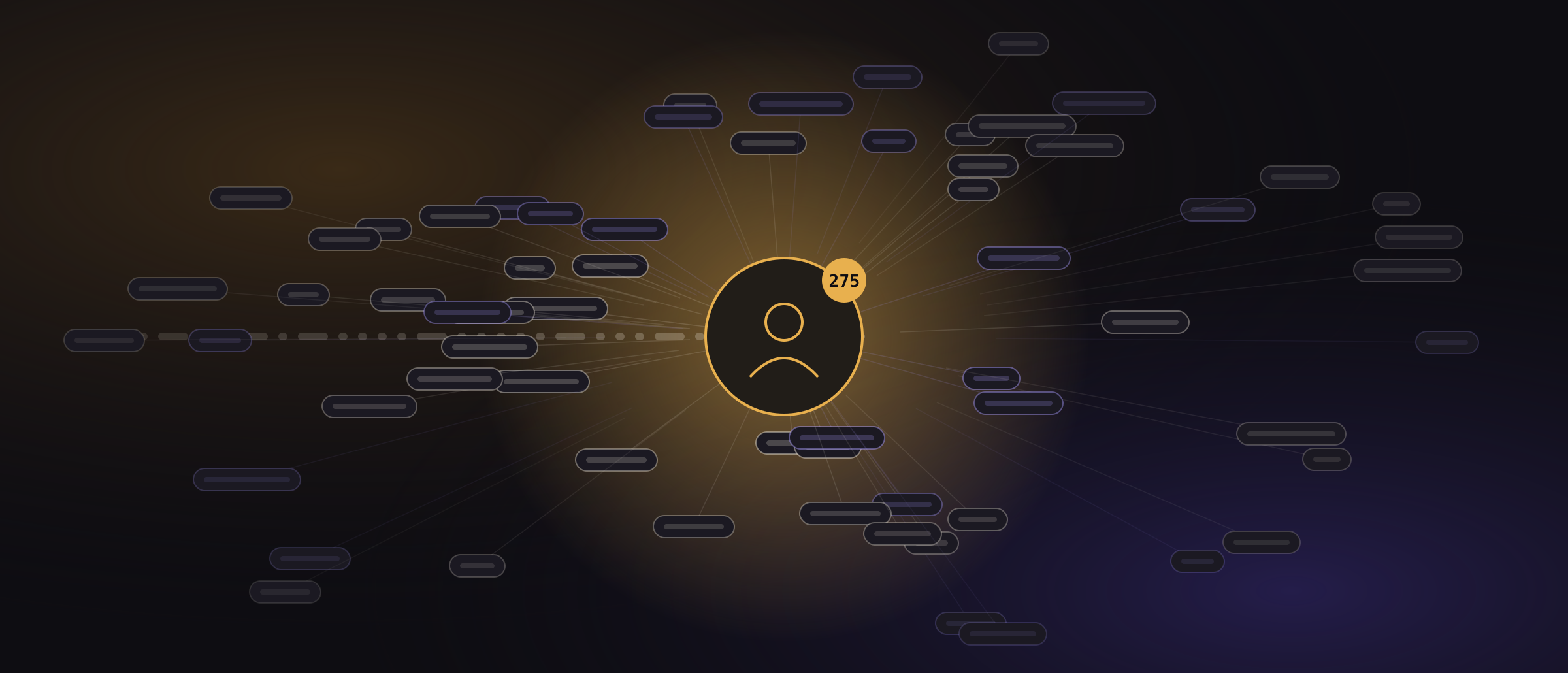
Half a century later, Microsoft published data drawn from the use of its own workplace software. People using Microsoft 365 were being interrupted, on average, every two minutes during core working hours, about 275 times a day, by meetings, emails or chats. The average worker received 117 emails and 153 Teams messages a day.2 These are tools whose entire purpose is to make working together easier. Many of the people using them report that they can no longer find time to do the work.
This is the puzzle worth investigating. Every major communication technology of the last two centuries has reduced the cost of sending a message. If communication keeps getting cheaper, why does it feel more expensive? The answer that emerges from the history is that the cost never disappeared. It moved. Each new tool made sending cheaper for the sender, and the saving reappeared as a burden on the receiver’s attention. The history of collaboration software is, to a surprising degree, the history of attempts to decide who should pay.
When sending was expensive
For most of human history, distance made every message costly. A letter required paper, a courier and time. The expense acted as a filter. People wrote when it mattered, and they put care into what they wrote because they could not easily follow up.
The electric telegraph, which opened between Washington and Baltimore in 1844, collapsed the time cost of distance but kept a financial one. Telegrams were charged by the word, so senders became experts in compression, omitting articles and pronouns and inventing codes to squeeze meaning into fewer billable words. The cost of communication sat with the sender, and the receiver got a message that had been carefully edited by someone who had paid for every word.
The telephone, from the late 1870s onward, removed the editing but added something new. A telephone call is synchronous: both people must be present at the same time. When it rings, it demands attention immediately, whatever the receiver was doing. In that sense the telephone was the first interruption technology. It also left no record. Business correspondence, in contrast, developed into a system of letters, memos and files that recorded decisions and moved them up and down organisations. The historian JoAnne Yates has shown how the memo and the filing cabinet became instruments of management control in American firms in the late nineteenth and early twentieth centuries.3
By the mid-twentieth century, then, organisations used two kinds of communication with opposite properties. Some were synchronous, immediate and unrecorded, like the phone call and the meeting. Others were asynchronous, slow and recorded, like the letter and the memo. Nearly every later tool can be understood as an attempt to combine the virtues of both without inheriting their costs.
Communication as building a shared model
Before looking at the tools, it is worth recalling what one of their most influential early thinkers believed communication was for, because the vision differs from what was eventually built.
In April 1968, J. C. R. Licklider and Robert Taylor, who between them directed much of the US government research that led to the internet, published an essay called “The Computer as a Communication Device.” It begins with a bold claim: “In a few years, men will be able to communicate more effectively through a machine than face to face.”4
What makes the essay distinctive is its definition of communication. “A communications engineer thinks of communicating as transferring information from one point to another in codes and signals,” they wrote. “But to communicate is more than to send and to receive.” For them, communication was a creative process in which people externalise their mental models and build a shared one. That requires “a plastic or moldable medium that can be modeled, a dynamic medium in which premises will flow into consequences, and above all a common medium that can be contributed to and experimented with by all.”5 The programmed computer, they argued, could be that medium.
Two details of the essay are remarkable in hindsight. First, they imagined an automated assistant they called OLIVER, “an ‘on-line interactive vicarious expediter and responder,’” a set of programs acting on its owner’s behalf, “taking care of many minor matters that do not require his personal attention and buffering him from the demanding world.”6 Second, they ended with a question about fairness: “Will ‘to be on line’ be a privilege or a right?”7
Licklider and Taylor thus anticipated both halves of the story that followed: tools that would let people reach each other far more easily, and the need for something to protect each person from the resulting demands.
The same year, the programmer Melvin Conway published an observation that would become famous among software engineers. “Organizations which design systems,” he wrote, “are constrained to produce designs which are copies of the communication structures of these organizations.”8 Communication tools, in other words, are not neutral pipes. How people communicate shapes what organisations are able to build.
Email: the price of a message falls to zero
In late 1971 Ray Tomlinson, an engineer at the research firm Bolt Beranek and Newman, combined a program for leaving messages to other users of the same computer with a program for copying files across the ARPANET. The result sent a message from one computer to another. To separate the user’s name from the name of their host machine, he chose the @ sign from his teletype keyboard, a character unlikely to appear in anyone’s name.9
Email was asynchronous, like the letter: the receiver read it when they chose. It was recorded, like the memo. And it was almost free to send. Within a few years it was the most popular use of the ARPANET. In 1982 the protocol that still carries email between servers was specified in RFC 821, with a modest stated objective: “to transfer mail reliably and efficiently.”10
The design of email reflected the culture of the research network that produced it. It was open: any server could send to any other, and no central authority decided who could write to whom. Addresses were universal. Messages were stored and forwarded, so the receiver did not need to be online. These were sensible choices for a network of cooperating researchers, and they are why email became the one communication system that works across every organisation in the world.
They also meant that the cost of sending fell essentially to zero while the cost of reading did not. A message that takes a sender ten seconds to write and send to a list of fifty people costs fifty people their attention. Unsolicited commercial email appeared on the ARPANET as early as 1978, and spam eventually grew into a large share of all email traffic. But spam is only the extreme case. The more ordinary consequence was the inbox as a queue that other people fill: a to-do list whose length the owner does not control.
This is the pattern of the whole story in miniature. The designers of email optimised for the sender, because the problem they were solving was the difficulty of reaching people. Once reaching people was easy, the problem became the opposite one.
Groupware: communicating through shared things
A different line of development treated collaboration not as sending messages but as working on shared objects. At the University of Illinois, the PLATO system had an online discussion feature called PLATO Notes in the 1970s. Ray Ozzie, who had worked on PLATO, later led the development of Lotus Notes, which shipped in December 1989.11 Notes organised collaboration around shared databases of documents that could be replicated between offices and synchronised, a design suited to a world of intermittent connections.
The same year, Clarence Ellis and Simon Gibbs published “Concurrency Control in Groupware Systems,” describing a technique that let several people edit the same document at the same time without locking each other out, by transforming each person’s operations to account for the others’ changes.12 This approach, operational transformation, was refined over the following years and eventually became one of the foundations of real-time collaborative editing on the web.
The philosophy here is closer to Licklider and Taylor’s. Rather than sending a message about the document, people work in the document. The shared artefact becomes the common medium that “can be contributed to and experimented with by all.” Communication becomes a by-product of building something together.
Presence: the light that says you are available
The 1990s added a third mode, between the phone call and the email. Internet Relay Chat, created in 1988, let groups talk in real time in named channels. ICQ in 1996 and AOL Instant Messenger in 1997 brought instant messaging to millions of home users. These tools introduced a small feature with large consequences: presence, the indicator that tells everyone whether you are online, away or busy.
Presence made a new kind of request possible: the quick question to someone you can see is available. It also created a new kind of obligation. If others can see you are online, they may expect a reply now. Instant messaging combined the immediacy of the phone call with the low cost of email, and so it combined the phone’s demand for attention with email’s willingness to send anything.
The document as the meeting place
In 2005 a small company called Upstartle released Writely, a word processor that ran in the web browser and let several people edit the same document. Google acquired the company in March 2006 and launched it, together with a spreadsheet, as Google Docs & Spreadsheets in October 2006.13
A document in a browser changed the shape of collaboration. Instead of drafting a document, attaching it to an email, collecting replies and merging edits, people could open the same document and see each other’s cursors moving. Comments replaced reply chains. The version history replaced the folder of attachments with names like “final_v3_revised.” For a large class of work, the email about the document became unnecessary, because the document itself was the conversation.
This was, arguably, the closest the industry came to Licklider and Taylor’s common medium. It did not replace messaging, but it moved a great deal of communication into the shared object where it could accumulate as a record of decisions rather than scatter across inboxes.
Slack: selling a reduction in overload
By the early 2010s many workplaces were struggling with email, and the next important product came from an unexpected place. A small company called Tiny Speck had been building an online game, Glitch, and had developed an internal chat tool to coordinate its own distributed team. When the game closed, the team turned the tool into a product. On 31 July 2013, two weeks before its preview release, the chief executive Stewart Butterfield sent his team a memo that was later published under the title “We Don’t Sell Saddles Here.”14
The memo is an unusually clear statement of a product’s philosophy. Butterfield argued that hardly anyone was shopping for “a group chat system,” so “what we’re selling is organizational transformation.” The software, he wrote, “just happens to be the part we’re able to build & ship.” And he named the transformation directly: “We’re selling a reduction in information overload, relief from stress, and a new ability to extract the enormous value of hitherto useless corporate archives.” Among the outcomes he listed as worth selling were “a reduction in the cost of communication,” “all your team communication, instantly searchable, available wherever you go,” and “75% less email.”14
Slack’s design followed from that theory. Conversations lived in channels organised by topic or team rather than in private inboxes. Channels were open by default, so that information was visible to anyone who might need it. Everything was searchable. Integrations brought notifications from other software into the same stream. In principle, this moved communication out of private queues and into a shared, searchable space.
Slack grew rapidly, Microsoft launched Teams in 2017 with a similar model built into its office software, and team chat became the default communication layer of many organisations. Salesforce acquired Slack in 2021.
What the memo’s promises reveal, read alongside the later evidence, is a familiar pattern. Chat did reduce email for many teams. But a chat message is even cheaper to send than an email, and channels invite more people to see more messages. Presence returned, and with it the expectation of quick replies. The archive was searchable, but the stream was continuous. The tool reduced one kind of overload and created conditions for another.
When the office moved into the camera
Video calling had existed for decades, but it became central almost overnight. Zoom, founded by Eric Yuan in 2011, was a fast-growing business tool when the COVID-19 pandemic closed offices and schools in early 2020. The company reported that daily meeting participants rose from about 10 million in December 2019 to 300 million in April 2020; it clarified at the time that this counted participants in meetings, so one person attending four meetings counted four times, rather than unique users.15 Even with that qualification, the scale of the change was without precedent.
Video calls restored synchrony to work that had become distributed. They also imported the costs of the meeting into the home, and added new ones. In 2021 the Stanford researcher Jeremy Bailenson proposed several reasons for what was being called “Zoom fatigue,” including prolonged close-up eye contact, constantly seeing one’s own image, reduced physical movement and the extra effort of reading nonverbal cues through a screen.16 His explanations were hypotheses rather than settled findings, but they captured a widely shared experience: a meeting held through a camera was not simply a meeting held at a distance.
Collaboration overload
Researchers had been measuring the accumulating cost for some time. In a 2016 article in the Harvard Business Review, Rob Cross, Reb Rebele and Adam Grant reported that, according to data they had collected over two decades, “the time spent by managers and employees in collaborative activities has ballooned by 50% or more.”17 Their concern was not that collaboration was bad, but that its demands fell unevenly, often on the most helpful people, whose time was consumed by requests from everyone else.
Microsoft’s 2025 data shows how far the pattern had gone. Beyond the interruption every two minutes, the average employee was sending or receiving more than 50 messages outside core business hours, and meetings after 8 p.m. were up 16 percent from the year before.2 The workday had no clear edge, because the tools did not.
This is Simon’s 1971 prediction in measurable form. The tools succeeded at their original goal. Reaching people became trivially easy. The cost moved to the receiver, and because every person is a receiver as well as a sender, it moved to everyone.
The receiver fights back
Much of the recent design of communication tools can be read as attempts to give the receiver some control again. Threads keep replies out of the main stream. Notification schedules and do-not-disturb modes let people decide when to be reachable. Status messages say “focusing” or “back at 3.” Scheduled send lets a message be written now and delivered during the receiver’s working hours. Some organisations adopted explicitly “asynchronous” or writing-first cultures, in which decisions are made in documents rather than meetings, and replies within hours, not minutes, are the norm.
Each of these measures restores a little of what the cost of sending once provided automatically: a filter. They are attempts to rebuild, by design and by convention, the friction that the technology removed.
The assistant arrives
The newest tools offer something different: an automated intermediary. Communication software now summarises meetings, drafts replies, triages inboxes and condenses long channels into a few lines. It is hard to read Licklider and Taylor’s 1968 description of OLIVER, an assistant “taking care of many minor matters that do not require his personal attention and buffering him from the demanding world,” without recognising the products being built now.6
There is a reasonable hope here. A good assistant could be the receiver’s ally, filtering and summarising so that attention goes where it matters. There is also an obvious risk. The same technology lowers the cost of writing messages, just as email lowered the cost of sending them. If machines make producing messages effortless, more messages will be produced, and the receiver’s assistant will be busy summarising text that the sender’s assistant wrote. Whether this restores attention or simply automates the overload depends on which side of the exchange these tools are designed to serve.
Understanding the philosophy
Communication software is usually evaluated by speed, reliability and features. But the problems people actually feel, overload, misunderstanding, the pressure to reply, the sense of being always on, are not technical. They concern what communication is for, what attention is, how conversation works, what presence means, and whether a message written by a machine is still a message from a person. This section takes those questions in turn. Each is explained in plain terms, connected to the thinkers who have examined it most carefully, traced in the history of the tools, tested against its strongest objection, and applied to working life today. The connections to named philosophers are interpretations offered to make the ideas understandable.
1. Sending is not communicating: three levels of the problem
The idea in plain terms
A message can arrive perfectly and still fail. It can be delivered but misunderstood, or understood but ignored. Getting the bits across is only the first and easiest part of communication.
The tradition
In 1949, introducing Claude Shannon’s mathematical theory of communication to a general audience, Warren Weaver distinguished three levels of the communication problem. Level A, the technical problem: how accurately can symbols be transmitted? Level B, the semantic problem: how precisely do the transmitted symbols convey the intended meaning? Level C, the effectiveness problem: how effectively does the received meaning affect conduct in the desired way?18 Shannon’s theory, Weaver stressed, dealt only with level A.
Where it shows up
Almost the entire history of communication technology, telegraph, telephone, email, chat, video, is a history of solving level A: faster, cheaper, more reliable transmission. RFC 821’s stated aim, “to transfer mail reliably and efficiently,” is a pure level A goal. Licklider and Taylor, by contrast, were writing about level B and beyond when they said that “to communicate is more than to send and to receive” and described communication as building shared models.4
The strongest objection
Solving level A was not trivial, and it was the precondition for everything else. Reliable, cheap transmission connected people who could never have reached each other before. The point is not that level A was unimportant but that it was the only level the tools could address directly.
What it means today
Many communication problems are blamed on tools that cannot fix them, because they are semantic or behavioural problems. Faster messaging does not create shared understanding; often it reduces the time available to build it. The useful question about any new tool is which of Weaver’s levels it actually improves.
2. Attention is the medium of experience
The idea in plain terms
Your attention is not just a scarce resource. It is, in a real sense, what your life consists of: what you attend to is what you experience. Whoever captures your attention shapes your experience.
The tradition
Herbert Simon’s observation that information “consumes the attention of its recipients” is the economic version of this idea.1 The psychological version is older. In The Principles of Psychology (1890), William James wrote: “My experience is what I agree to attend to.” For James, attention was not passive reception but selection, the act by which a person shapes their own experience out of the flood of possible impressions.
Where it shows up
Each tool that made sending cheaper also made claiming someone else’s attention cheaper. Presence indicators, notifications and open channels all increase the number of claims on attention, and Microsoft’s 2025 figure of an interruption roughly every two minutes during core hours measures the result.2 Do-not-disturb modes, notification schedules and focus statuses are attempts to restore James’s “agree”: to let the receiver decide what will be attended to.
The strongest objection
Many interruptions are welcome. A question answered quickly can save hours, and a notification may carry exactly what one needed. Overload is partly subjective and varies by role. The problem is not interruption as such, but interruption that the receiver did not, in any meaningful sense, agree to.
What it means today
Treating attention as the substance of experience rather than a commodity changes how one designs and uses tools. A good communication culture is one in which people can agree to what they attend to, and in which senders respect that agreement.
3. The unwritten rules of conversation
The idea in plain terms
In ordinary conversation, people follow unspoken rules: say as much as is needed and no more, be truthful, be relevant, be clear. When those rules break, communication becomes tiring even if every message is technically delivered.
The tradition
The philosopher Paul Grice described these rules in 1975 as the cooperative principle and its four maxims: quantity (make your contribution as informative as required, and not more), quality (do not say what you believe false), relation (be relevant), and manner (be clear and orderly).19 Grice showed that much of what we understand in conversation depends on assuming the other person is following these maxims.
Where it shows up
The telegraph’s per-word price enforced the maxim of quantity mechanically: senders said exactly as much as was required, because more cost money. Email and chat removed that enforcement. Reply-all chains, “FYI” forwards and status updates that reach everyone in a channel are, in Grice’s terms, violations of quantity and relation, made rational by the fact that sending costs nothing. Collaboration overload is partly the aggregate cost of millions of small breaches of conversational maxims.
The strongest objection
Organisations need some redundancy. A message that is irrelevant to most recipients may be vital to one, and the sender often cannot know which. Broad sharing also supports transparency, a value Slack’s open channels were designed to promote.
What it means today
When the medium no longer enforces the maxims, people must. Writing messages that are as informative as required and no more, sending them only to those for whom they are relevant, and making them clear, is the discipline that cheap channels made optional and overloaded workplaces made necessary.
4. Presence and absence
The idea in plain terms
Talking with someone in real time is different from exchanging messages. Presence offers immediacy and responsiveness; absence offers time to think and freedom from interruption. Each mode allows things the other does not.
The tradition
In I and Thou (1923), the philosopher Martin Buber distinguished two basic attitudes: the I–It relation, in which we treat others as objects to be used or managed, and the I–Thou relation, a genuine encounter in which each person is fully present to the other. In Reclaiming Conversation (2015), the MIT sociologist Sherry Turkle argued, from years of interviews, that face-to-face conversation is where empathy and self-reflection develop, and that constant mediated communication can erode them.20
Where it shows up
The telephone and the video call are presence technologies; letters, email and documents are technologies of absence. Instant messaging and team chat blur the two: they are written, but they carry presence through availability indicators and the expectation of quick replies. The pandemic’s shift to video, and the fatigue it produced, showed that imitated presence is not the same as presence.
The strongest objection
Absence has its own goods. Asynchronous communication includes people in different time zones, those who think better in writing, and those for whom live meetings are difficult. It leaves a record and gives time for reflection. A purely presence-based culture would exclude many people and lose much thought.
What it means today
The wise use of tools matches mode to purpose: presence for relationships, difficult conversations and creative exploration; absence for information, decisions that need reflection and work that needs focus. Many frustrations come from using one mode for the other’s job.
5. The medium shapes the thought
The idea in plain terms
The same idea expressed as a chat message, a slide deck and a written memo becomes three different ideas. Each medium favours some kinds of thinking and discourages others.
The tradition
Marshall McLuhan’s phrase “the medium is the message” (Understanding Media, 1964) claimed that a medium’s form affects people and societies more than any particular content it carries. Neil Postman developed the idea in Amusing Ourselves to Death (1985), arguing that each medium carries an epistemology: television, for example, favours entertainment and fragmentation over sustained argument, and so changes what public discourse can be.
Where it shows up
Chat favours brevity, speed and reaction; it is poor at sustained reasoning. Slides favour bullet points and visual claims. Long-form documents favour argument and evidence. Some organisations have chosen media deliberately for their effects on thought. Amazon is well known for replacing slide presentations in many meetings with narrative memos that attendees read in silence at the start, on the theory that writing full sentences forces clearer thinking, a practice described in detail in Working Backwards.
The strongest objection
Media do not determine thought completely. People write careful arguments in chat and shallow ones in memos. McLuhan’s claims were provocative generalisations rather than measured findings. Content and skill still matter.
What it means today
Choosing a communication tool is choosing an epistemology. Decisions that need careful reasoning deserve a medium that supports it; the ease of chat is no argument for using it to think.
6. Organisations are made of their conversations
The idea in plain terms
An organisation is not only its people and its org chart. It is the pattern of who talks to whom, about what, through which channels. Change the channels, and you change the organisation.
The tradition
Melvin Conway’s 1968 observation, that organisations “are constrained to produce designs which are copies of the communication structures of these organizations,” is usually applied to software.8 Software engineers later coined the term “inverse Conway manoeuvre” for deliberately reorganising teams to get the system architecture they want. JoAnne Yates’s history of the memo shows the same dynamic a century earlier: new forms of written communication made new forms of management control possible.3
Where it shows up
Email made communication across hierarchies easier and also flooded inboxes. Open Slack channels made information visible across teams, flattening some hierarchies while creating new kinds of informal power for those most active in them. Remote video meetings changed who speaks and who is heard.
The strongest objection
Culture and leadership shape communication more than tools do. A tool adopted in a hierarchical culture will often be bent to reproduce that hierarchy. Technology enables organisational change; it rarely causes it alone.
What it means today
Rolling out a communication tool is an organisational decision, not an IT purchase. It is worth asking, before adoption, what patterns of conversation the tool will encourage and whether those are the patterns the organisation needs.
7. When machines write and read the messages
The idea in plain terms
If an AI drafts your message and the recipient’s AI summarises it, has a person communicated with a person? Something passed between two people, but neither may have fully written or read it.
The tradition
The philosopher Jürgen Habermas, in The Theory of Communicative Action (1981), distinguished communicative action, aimed at reaching mutual understanding, from strategic action, aimed at achieving one’s own ends by influencing others. He argued that every sincere communicative act raises implicit claims, among them that what is said is true, that it is appropriate, and that it is sincerely meant. Grice’s maxim of quality makes a related point about truthfulness.
Where it shows up
Licklider and Taylor’s OLIVER, the agent “buffering him from the demanding world,” was imagined as a helper, handling minor matters on its owner’s behalf.6 Today’s AI tools draft replies, summarise threads and condense meetings. They can relieve real drudgery. They also make it possible to send messages one has not composed and to respond to messages one has not read.
The strongest objection
People have always used help to communicate, secretaries, speechwriters, templates. An assistant that drafts a polite reply does not make it insincere if the sender reviews and means it. Delegation is not deception.
What it means today
The sincerity claim Habermas described depends on someone standing behind the words. As machines take over more of the writing and reading, the practical question becomes when a message still carries a person’s commitment, and how recipients can tell. Organisations may need norms, not only tools, for that.
Bringing the threads together
Seen philosophically, the history of communication tools is a story of extraordinary success at Weaver’s level A, and of growing strain at levels B and C. Attention, which William James saw as the substance of experience, became the currency every message spends. Grice’s maxims, once enforced by the cost of sending, now depend on each person’s discipline. Presence and absence each have goods that tools can support or erode. Each medium carries its own epistemology. Organisations take the shape of their conversations. And as machines begin to write and read on our behalf, Habermas’s question of sincerity becomes practical. The tools will keep improving at moving words. Whether people understand each other better depends on choices the tools cannot make for them.
Putting a price back on the message
Return to the question at the start. The tools built to make communication easier left many people feeling that they cannot get anything done because each tool solved the problem of its time, which was the difficulty of reaching people, and in solving it created the next problem, which was the difficulty of not being reached.
The history suggests that the goal was never to make communication free. When sending a message cost something, the cost carried information: it told the receiver that the sender thought the message was worth the price. Removing the cost removed that signal, and attention became the currency that every message now spends. The most thoughtful tools, and the most thoughtful working cultures, are those that restore a fair price, in effort, in clarity or in timing, so that a message once again says something about its own importance.
Licklider and Taylor’s first sentence turned out to be true in ways they could not have measured: people do communicate through machines constantly, across any distance. Their deeper point is the one that still matters. To communicate is more than to send and receive. The tools that endure will be the ones that help people build a shared understanding, not the ones that let them reach each other more often.
Selected bibliography
- Licklider, J. C. R., and Robert W. Taylor. “The Computer as a Communication Device.” Science and Technology, April 1968; reprinted in DEC SRC Research Report 61 (1990). PDF
- Conway, Melvin E. “How Do Committees Invent?” Datamation, April 1968. melconway.com
- Simon, Herbert A. “Designing Organizations for an Information-Rich World.” In Computers, Communications, and the Public Interest, ed. Martin Greenberger. Johns Hopkins Press, 1971.
- Postel, Jonathan B. “Simple Mail Transfer Protocol.” RFC 821, August 1982. rfc-editor.org
- Ellis, C. A., and S. J. Gibbs. “Concurrency Control in Groupware Systems.” Proceedings of ACM SIGMOD (1989): 399–407.
- Yates, JoAnne. Control through Communication: The Rise of System in American Management. Johns Hopkins University Press, 1989.
- Butterfield, Stewart. “We Don’t Sell Saddles Here.” Memo of 31 July 2013, published on Medium, 17 February 2014.
- Cross, Rob, Reb Rebele, and Adam Grant. “Collaborative Overload.” Harvard Business Review, January–February 2016. hbr.org
- Bailenson, Jeremy N. “Nonverbal Overload: A Theoretical Argument for the Causes of Zoom Fatigue.” Technology, Mind, and Behavior 2, no. 1 (2021).
- Microsoft WorkLab. “Breaking Down the Infinite Workday.” Work Trend Index, 17 June 2025. microsoft.com
- Standage, Tom. The Victorian Internet. Walker, 1998.
- Weaver, Warren. “Recent Contributions to the Mathematical Theory of Communication.” In Claude E. Shannon and Warren Weaver, The Mathematical Theory of Communication. University of Illinois Press, 1949.
- James, William. The Principles of Psychology. Henry Holt, 1890.
- Grice, H. Paul. “Logic and Conversation.” In Syntax and Semantics 3: Speech Acts, ed. P. Cole and J. Morgan. Academic Press, 1975.
- Buber, Martin. I and Thou. 1923.
- Turkle, Sherry. Reclaiming Conversation: The Power of Talk in a Digital Age. Penguin Press, 2015.
- McLuhan, Marshall. Understanding Media: The Extensions of Man. McGraw-Hill, 1964.
- Postman, Neil. Amusing Ourselves to Death. Viking, 1985.
- Bryar, Colin, and Bill Carr. Working Backwards. St. Martin’s Press, 2021.
- Habermas, Jürgen. The Theory of Communicative Action. 1981; trans. Thomas McCarthy, Beacon Press, 1984–87.
Research limitations
Simon’s 1971 essay is quoted as it is widely reproduced; the original volume was not consulted directly. Details of Tomlinson’s first email come from his later recollections rather than contemporaneous records. The account of Slack’s origins relies on Butterfield’s memo as published by its author, which presents the company’s intentions rather than independent evaluation. Zoom’s figures are the company’s own, as clarified in April 2020. Microsoft’s Work Trend Index figures are based on aggregated telemetry from Microsoft 365 users and exclude some customer groups; they describe users of those products, not all workers. Bailenson’s causes of video-call fatigue were presented as theoretical arguments. The interpretation of communication history as a movement of cost from sender to receiver is the author’s synthesis, built on Simon’s observation. The philosophical section connects communication tools to Weaver, Simon, William James, Grice, Buber, Turkle, McLuhan, Postman, Conway, Yates and Habermas; apart from Licklider and Taylor’s own framing and Conway’s observation, these connections are the author’s interpretation, offered to make the ideas understandable.
Footnotes
-
Herbert A. Simon, “Designing Organizations for an Information-Rich World,” in Martin Greenberger, ed., Computers, Communications, and the Public Interest (Johns Hopkins Press, 1971), as widely quoted; see, for example, Conversable Economist. ↩ ↩2
-
Microsoft WorkLab, “Breaking Down the Infinite Workday,” Work Trend Index (17 June 2025), main text and methodology; based on aggregated Microsoft 365 signals ending 15 February 2025. ↩ ↩2 ↩3
-
JoAnne Yates, Control through Communication: The Rise of System in American Management (Johns Hopkins University Press, 1989). ↩ ↩2
-
J. C. R. Licklider and Robert W. Taylor, “The Computer as a Communication Device,” Science and Technology (April 1968), p. 21. ↩ ↩2
-
Licklider and Taylor, pp. 21–22. ↩
-
Licklider and Taylor, p. 40. ↩
-
Melvin E. Conway, “How Do Committees Invent?,” Datamation (April 1968), conclusion. ↩ ↩2
-
Accounts based on Tomlinson’s later interviews; see, for example, “Ray Tomlinson, email inventor who picked the @ sign for addresses, dies,” PCWorld, March 2016, pcworld.com. ↩
-
Jonathan B. Postel, “Simple Mail Transfer Protocol,” RFC 821 (August 1982), §1 Introduction. ↩
-
Ray Ozzie’s account in “Groupware hug: Lotus Notes turning 25,” Network World (interview first published 2 December 2004), networkworld.com; and the Computer History Museum oral history of Ray Ozzie. ↩
-
C. A. Ellis and S. J. Gibbs, “Concurrency Control in Groupware Systems,” Proceedings of the 1989 ACM SIGMOD International Conference on Management of Data, pp. 399–407. ↩
-
Encyclopaedia Britannica, “Google Docs,” britannica.com; Google’s acquisition of Upstartle was announced on 9 March 2006. ↩
-
Stewart Butterfield, “We Don’t Sell Saddles Here,” memo to the Tiny Speck team, 31 July 2013, published on Medium, 17 February 2014. ↩ ↩2
-
Reporting on Zoom’s clarification of its “daily meeting participants” figure, 30 April 2020; see, for example, BNN Bloomberg. ↩
-
Jeremy N. Bailenson, “Nonverbal Overload: A Theoretical Argument for the Causes of Zoom Fatigue,” Technology, Mind, and Behavior 2, no. 1 (2021). ↩
-
Rob Cross, Reb Rebele and Adam Grant, “Collaborative Overload,” Harvard Business Review (January–February 2016). ↩
-
Warren Weaver, “Recent Contributions to the Mathematical Theory of Communication,” in Claude E. Shannon and Warren Weaver, The Mathematical Theory of Communication (University of Illinois Press, 1949), section 1.1. ↩
-
H. Paul Grice, “Logic and Conversation,” in P. Cole and J. Morgan, eds., Syntax and Semantics 3: Speech Acts (Academic Press, 1975). ↩
-
Sherry Turkle, Reclaiming Conversation: The Power of Talk in a Digital Age (Penguin Press, 2015). ↩
How it evolved
The arc
- 1844
Samuel Morse’s telegraph line between Washington and Baltimore opens. Messages are charged by the word, so senders write as little as possible.
- 1968
Licklider and Taylor predict that people will soon communicate more effectively through a machine than face to face. Conway observes that organisations design systems that copy their communication structures.
- 1971
Ray Tomlinson sends email between two computers on the ARPANET and chooses @ to separate a user from their host. Herbert Simon warns that information consumes attention.
- 1982
SMTP is specified as an open protocol for moving mail “reliably and efficiently,” letting anyone send to anyone.
- 1989
Lotus Notes ships as groupware built around shared, replicated databases. Ellis and Gibbs describe operational transformation for real-time shared editing.
- 1996
Instant messaging spreads with ICQ and, a year later, AIM. Presence, the little light saying someone is available, becomes a feature.
- 2006
Google Docs launches from the acquired Writely, making the shared document itself the meeting place.
- 2013
Slack’s team is told that what they are selling is “organizational transformation,” including “a reduction in information overload.”
- 2020
Zoom’s daily meeting participants rise from about 10 million to 300 million in four months as offices close.
- 2025
Microsoft reports that workers using its tools are interrupted about every two minutes, 275 times a day.
Left open
Questions to sit with
- When you send a message, how often do you consider what it costs the person who receives it?
- Is a shared document a better form of communication than a conversation, or only a better record of one?
- If AI agents begin writing and reading most workplace messages for us, will communication become cheaper, or will we simply stop doing it ourselves?
Follow the thread
Where this essay connects
Shrikant Kumar. “Who Pays for a Message?.” Essay on Communication Tools, Telos, published 11 September 2022, updated 22 October 2026. https://shrikantk.com/blog/who-pays-for-a-message/